
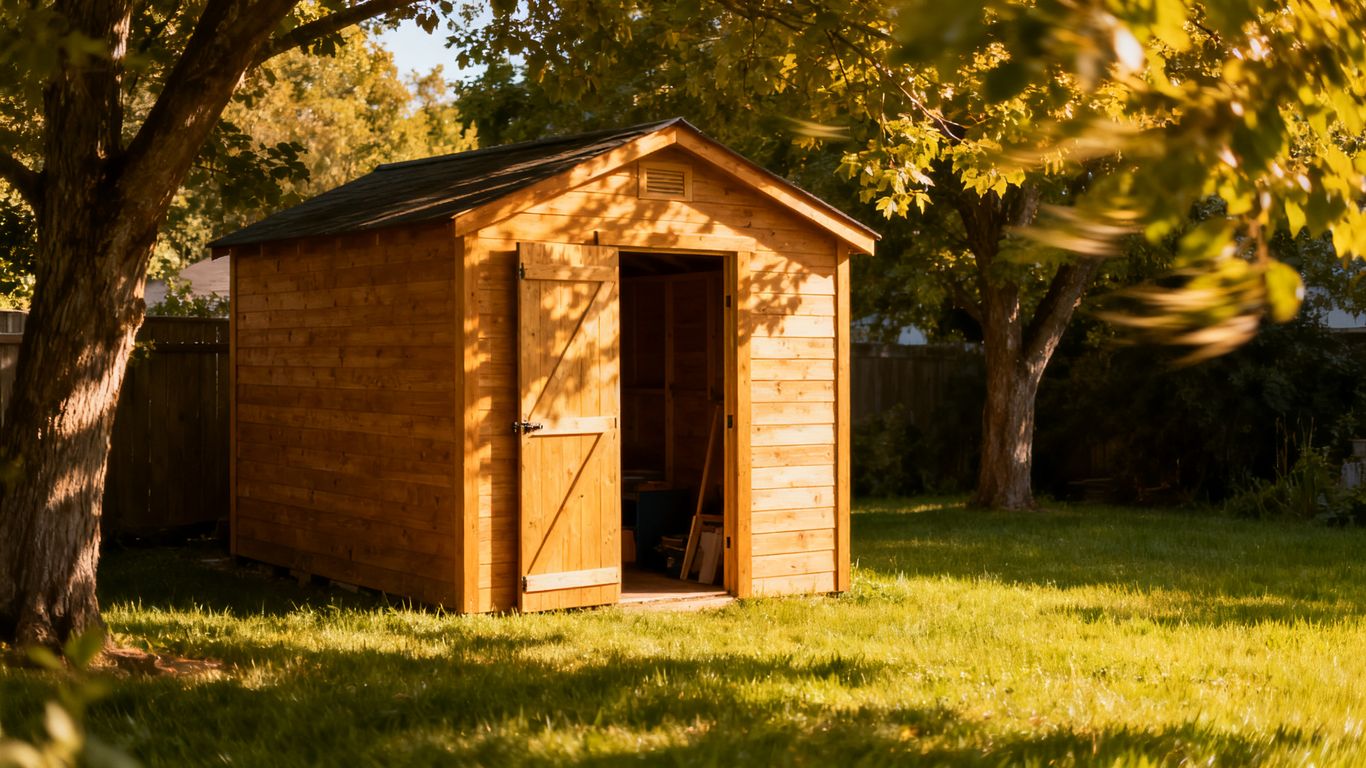
Summer in Texas can be brutal, and our backyard storage sheds often bear the brunt of the heat. We’ve all experienced opening a shed door to a blast of hot air, making it uncomfortable to find anything inside. We’re looking into some straightforward cooling solutions for storage sheds to make them more usable during the hottest months.
Key Takeaways
- We can improve airflow in our sheds by using natural wind patterns and adding vents.
- Reducing how much heat our sheds absorb is important, and we can do this with lighter roof colors and by adding shade.
- Implementing these cooling solutions for storage sheds will make them more pleasant places to be.
Ventilation Strategies For Shed Cooling Solutions
Keeping our backyard storage sheds cool during the Texas summer requires a smart approach, and ventilation is a big part of that. Without good airflow, heat just builds up inside, making it uncomfortable and potentially damaging to stored items. We need to think about how air moves in and out.
Harnessing Natural Airflow
We can make the most of natural air movement to help cool things down. The basic idea is to let cooler air in low and push warmer air out high. This creates a cycle that pulls heat away. Think about where the sun hits your shed most and where breezes typically come from. We can position vents to take advantage of these natural patterns.
- Placement is key: We should aim for vents on opposite sides of the shed, with some lower down and others higher up. This encourages a cross-breeze.
- Consider prevailing winds: If we know which way the wind usually blows in our area, we can set up intake vents on the windward side and exhaust vents on the leeward side.
- Size matters: The size of the vents needs to be appropriate for the shed’s volume. Too small, and they won’t move enough air; too large, and they might let in too much rain or pests.
We’ve found that even simple adjustments, like opening existing windows or doors strategically, can make a noticeable difference on less extreme days. It’s about creating pathways for the hot air to escape.
Installing Ridge Vents and Gable Vents
For a more permanent and effective solution, installing dedicated vents is a good idea. Ridge vents, which run along the peak of the roof, and gable vents, usually placed in the triangular part of the wall under the roofline, are excellent for letting hot air escape. They work together to create a chimney effect.
- Ridge Vents: These are great because hot air naturally rises. A ridge vent allows this hot air to escape right at the highest point of the shed. We usually install them under the roofing material so they blend in.
- Gable Vents: These are typically installed in the gable ends of the shed. They can be louvered to keep rain out and often have screens to stop insects. They work well in conjunction with lower intake vents.
We can also add soffit vents under the eaves to let cooler air in, completing the natural ventilation system. Properly installed vents are one of the most effective ways we can combat heat buildup in our sheds.
Reducing Heat Absorption With Shed Cooling Solutions
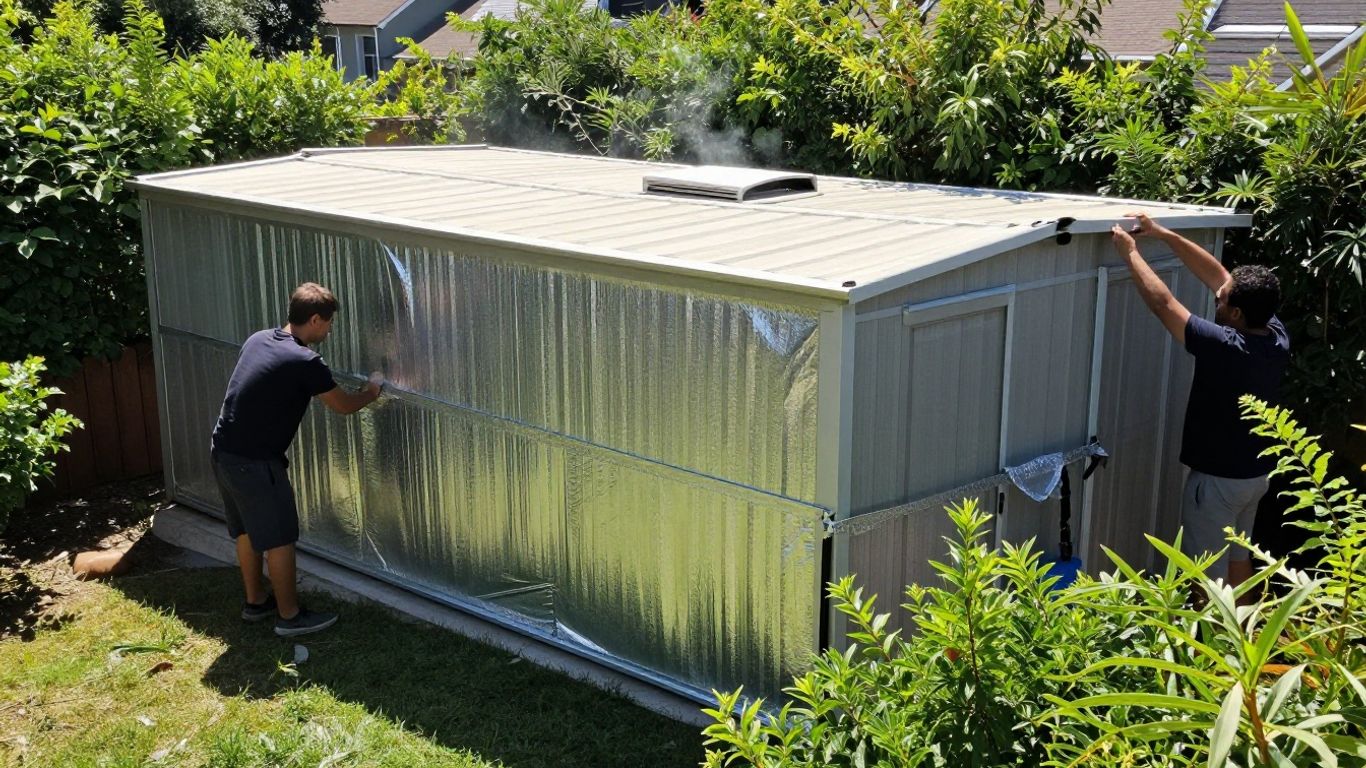
The sun beating down on our sheds can turn them into little ovens, especially during the peak of summer. We’ve found that tackling heat absorption head-on is just as important as getting air moving. Minimizing how much heat the shed itself soaks up is key to keeping things inside comfortable.
Choosing Reflective Roofing Materials
Think about your roof. A dark roof, like asphalt shingles, acts like a giant heat magnet. We’ve seen a big difference by switching to lighter, reflective materials. These bounce sunlight away instead of absorbing it. Materials like metal roofing with a light-colored coating or specialized reflective coatings applied over existing surfaces can significantly lower the roof’s temperature. We looked at a few options:
- Standard Dark Shingles: Absorbs a lot of heat, leading to higher shed temperatures.
- Light-Colored Metal Roofing: Reflects a good portion of solar radiation.
- Reflective Coating: Can be applied to many existing roof types, offering a cost-effective upgrade.
Even a few degrees cooler on the roof can make a noticeable difference inside the shed.
Implementing Shade Structures
Sometimes, the simplest solutions are the most effective. Blocking direct sunlight from hitting the shed walls and roof is a straightforward way to reduce heat gain. We’ve explored a few ways to do this:
- Planting Trees or Tall Shrubs: Strategically placed deciduous trees can provide shade in the summer and let sun through in the winter. It takes time to grow, but it’s a natural and attractive option.
- Building a Pergola or Awning: A simple wooden pergola or a fabric awning attached to the shed can cast a significant shadow. Make sure it’s sturdy enough to withstand wind.
- Using Shade Cloth: This is a more temporary but very effective solution. You can drape UV-resistant shade cloth over the shed, securing it well. It allows some airflow while blocking direct sun.
We found that combining a reflective roof with some form of shade structure gave us the best results. It’s about layering your defenses against the Texas sun. Don’t underestimate the power of a simple shade sail or a well-placed bush to keep your shed from becoming an unbearable sauna.
Wrapping It Up
So, keeping our backyard storage shed cool in the Texas summer isn’t easy, but it’s definitely doable. We just have to stay on top of things—adding some shade, making sure there’s airflow, maybe even tossing in a fan or two if we need it. Sometimes, the simple fixes like painting the shed a lighter color or putting up a tarp can make a big difference. We all know how rough those hot days can get, but with a little effort, we can keep our stuff safe and our shed a lot more comfortable. Let’s keep it cool out there, one step at a time.
Frequently Asked Questions
Why does our shed get so hot in the summer?
Our sheds can become like ovens because they often lack good airflow. Sunlight heats up the roof and walls, and without a way for that hot air to escape, it just builds up inside. Think of it like a car parked in the sun – the windows trap the heat, and so can a poorly ventilated shed.
What’s the easiest way to get more air moving in our shed?
We can make a big difference by simply letting the air flow naturally. Opening doors and windows, if we have them, helps a lot. We can also add vents near the top of the shed, like on the roof ridge or the upper walls (called gable vents). These let the hot air rise and exit, pulling cooler air in from the bottom.
Can we stop the sun from heating up the shed so much?
Absolutely! One smart move is to use roofing materials that bounce sunlight away instead of soaking it up, like lighter colors or special reflective coatings. Another great idea is to create some shade. Planting a tree nearby or setting up a simple awning or shade sail over the shed can block direct sun and significantly lower the temperature inside.
Tags: Affordable Sheds, Long Lasting Sheds, Residential Shed Builder