
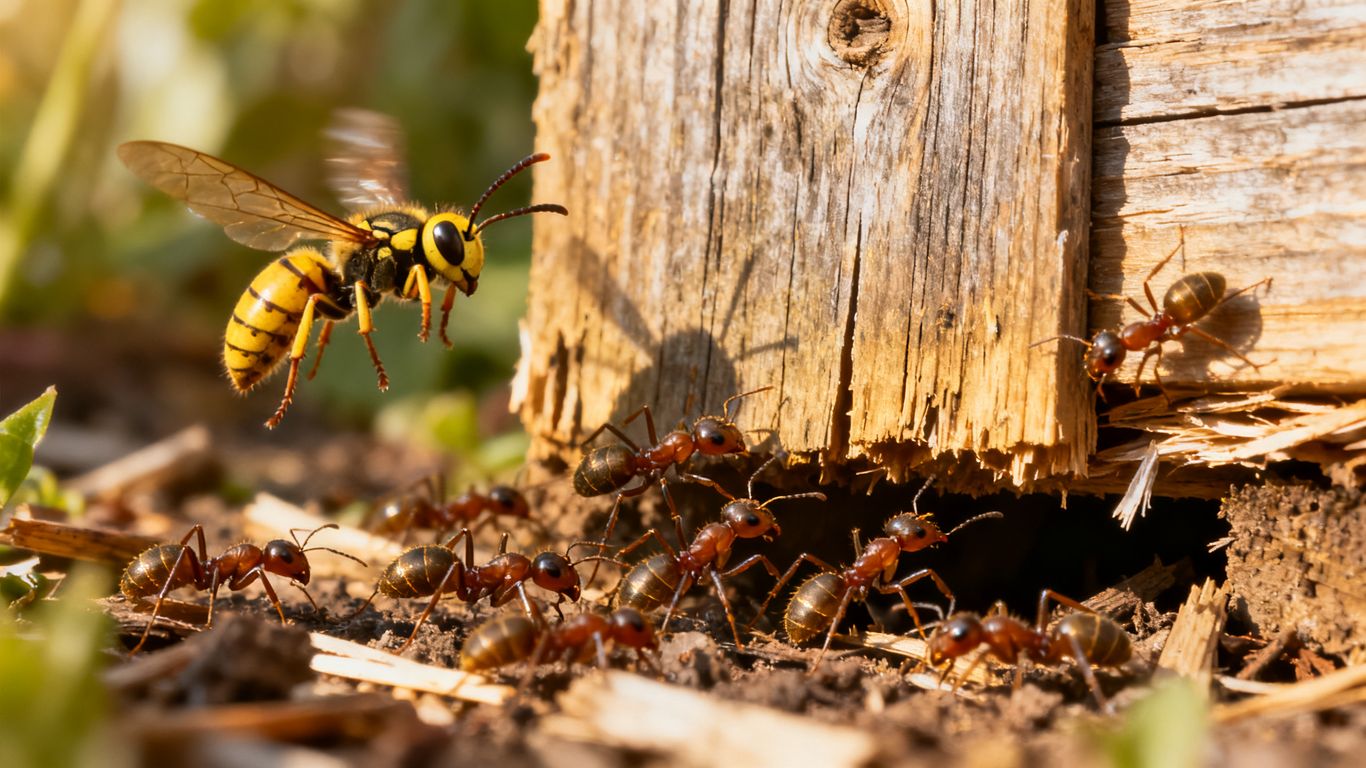
Summer is a great time for outdoor projects, but we often forget about the pests that might be sharing our space. Specifically, fire ants and wasps love setting up shop around sheds, which can make working on your summer projects a bit risky. We’ve put together some tips to help you deal with these common shed pests so you can enjoy your yard and your projects without any unexpected visitors.
Key Takeaways
- Learn to spot the signs of fire ant mounds and wasp nests near your shed to avoid surprises.
- Explore natural ways to keep these insects away from your shed area before resorting to chemicals.
- Understand when and how to use chemical treatments for effective shed pest control if natural methods aren’t enough.
Identifying Fire Ant and Wasp Nests Near Your Shed
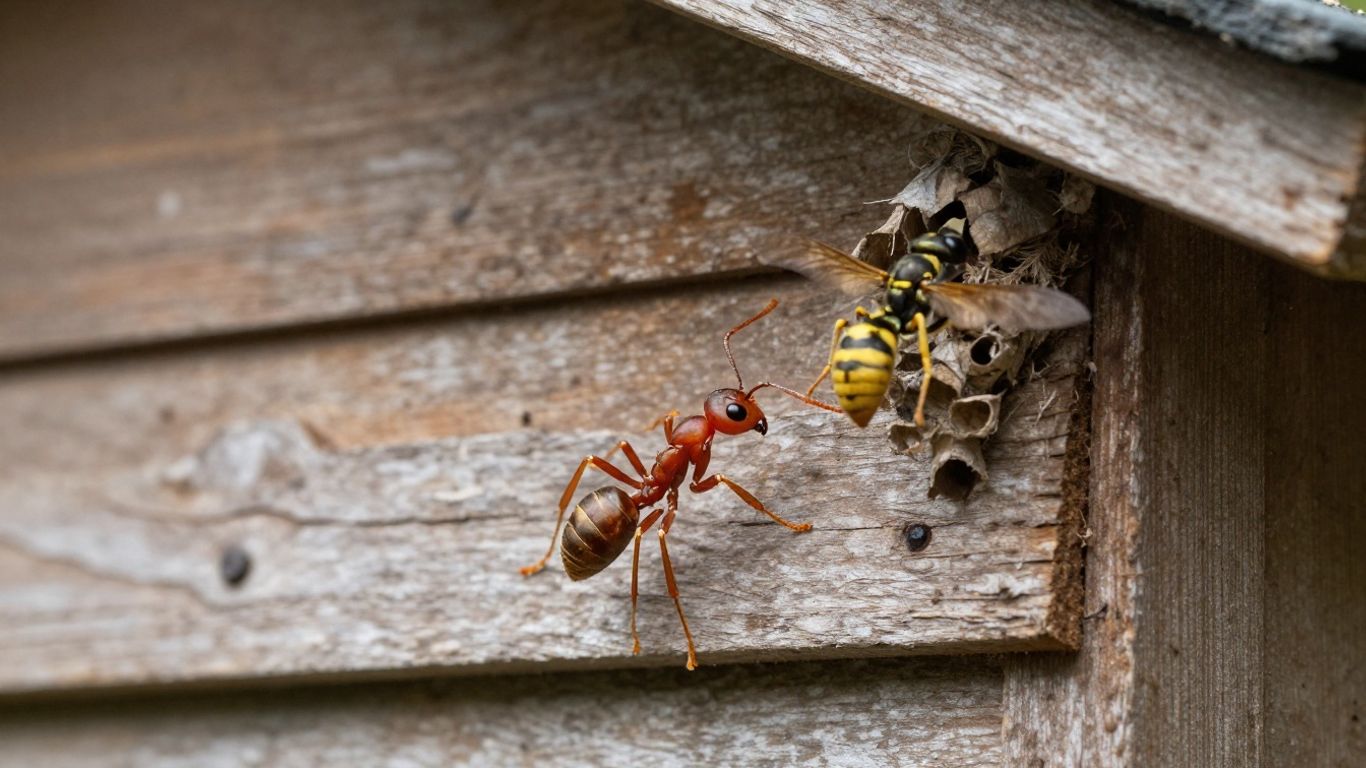
Before we can tackle any pest problems around our sheds, we first need to know what we’re dealing with and where it’s hiding. Fire ants and wasps can turn a simple weekend project into a painful ordeal if we’re not careful. Let’s get a good look at how to spot their nests.
Recognizing Fire Ant Mounds
Fire ant mounds are pretty distinctive, though they can sometimes be mistaken for other ant hills. They don’t build those big, volcano-shaped mounds you might see with some other ant species. Instead, fire ant mounds are usually just a loose pile of soil, often with no visible entrance hole. They can pop up in sunny, open areas, which often includes the ground around our sheds. You might see them in lawns, gardens, or even cracks in pavement.
- Look for disturbed soil: The mounds themselves are just loose dirt, sometimes looking like a small pile of coffee grounds.
- Check for activity: You’ll often see a lot of ants moving in and out of the general area, even if there isn’t a clear hole.
- Location matters: They prefer well-drained soil and often build near foundations or in areas that get a lot of sun.
Sometimes, especially after a rain, you might not see a mound at all, but you’ll still see the ants. They can also build nests in rotting wood or under rocks, so keep an eye out in those spots too.
We need to be observant. A quick scan of the area before we start working can save us a lot of trouble later on. It’s better to spot a nest from a distance than to step right into one.
Locating Wasp Nests Around Shed Structures
Wasps can be a bit trickier because they build nests in a variety of places, and some are quite well hidden. We need to be thorough when checking our sheds.
- Eaves and overhangs: Many common wasps, like paper wasps, build open, umbrella-shaped nests under the eaves or any overhang on the shed.
- Wall voids and openings: Some wasps, especially yellow jackets, can build nests inside wall cavities or in holes in the shed’s siding or foundation. You might hear a buzzing sound coming from the wall.
- Attic or soffits: If your shed has an attic space or soffits, these are prime locations for wasps to build larger, enclosed nests.
Don’t forget to check less obvious spots. Wasps can also build nests in undisturbed corners, inside old equipment stored in the shed, or even in dense vegetation growing right up against the shed walls. A careful inspection of the shed’s exterior and interior is key to finding all potential wasp nesting sites. We should also pay attention to any increased wasp activity around the shed, as this is a sure sign a nest is nearby.
Effective Shed Pest Control Strategies
Dealing with fire ants and wasps around our sheds can really put a damper on summer projects. We want to get out there, fix things up, or just enjoy our space without worrying about stings. Fortunately, there are ways to tackle these pests.
Natural Methods for Fire Ant and Wasp Deterrence
Sometimes, we prefer to avoid harsh chemicals, and that’s understandable. There are a few natural approaches that can help keep these insects away from our sheds.
- Vinegar Spray: A simple mix of white vinegar and water can be sprayed around the base of the shed and on known ant trails. It disrupts their scent trails, making it harder for them to find their way.
- Peppermint Oil: Ants and wasps generally dislike the strong smell of peppermint. We can mix a few drops of peppermint essential oil with water in a spray bottle and apply it around the shed’s perimeter. Reapplication might be needed after rain.
- Diatomaceous Earth (Food Grade): This is a powder made from fossilized aquatic organisms. When ants or wasps walk through it, it scratches their exoskeleton, causing them to dehydrate. We can sprinkle it around the shed foundation, but be careful not to inhale the dust.
We found that a combination of these methods worked best for us. It wasn’t an instant fix, but over a few weeks, we noticed fewer ant trails and less wasp activity near the shed door.
Chemical Treatments for Persistent Shed Pest Control
When natural methods aren’t quite cutting it, or if we’re dealing with a serious infestation, chemical treatments might be necessary. Always follow the product instructions carefully and take safety precautions.
- Fire Ant Baits: These are often very effective. The ants carry the poisoned bait back to the colony, which helps eliminate the nest from the inside. Placement is key; put them near active ant trails but away from pets and children.
- Wasp and Hornet Sprays: For visible wasp nests, a direct spray designed for wasps can be used. It’s best to apply these at dusk or dawn when the wasps are less active. Aim directly at the nest opening.
- Residual Sprays: Some sprays can be applied around the shed’s foundation to create a barrier that kills insects on contact. These can offer longer-term protection but may need reapplication.
| Pest Type | Recommended Chemical Treatment | Application Area |
|---|---|---|
| Fire Ants | Granular Bait or Liquid Drench | Around shed foundation, near active trails |
| Wasps/Hornets | Aerosol Nest Spray | Directly onto visible nests (use caution) |
| General Crawling Insects | Residual Barrier Spray | Perimeter of shed, entry points, window frames |
Wrapping Up Shed Safety
So, we’ve talked about keeping those pesky fire ants and wasps away from our sheds. It’s not the most fun chore, but honestly, it makes a big difference. Nobody wants to be surprised by a sting when they’re just trying to grab a tool or start a summer project. Taking a little time to deal with these pests means we can use our sheds more freely and safely. Let’s all try to get this done before the really warm weather hits, so we can enjoy our yards and projects without worry. It’s a small step that really pays off for a more peaceful summer.
Frequently Asked Questions
What are the first signs that we might have fire ants or wasps near our shed?
We should keep an eye out for small dirt piles, which often mean fire ants have built a home. For wasps, we’ll look for papery nests, usually hidden under eaves, in corners, or in any openings around the shed’s structure. Seeing a lot of these insects buzzing around the shed is also a big clue.
Are there ways to keep these pests away from our shed without using strong chemicals?
Yes, we can try natural methods first. Planting certain herbs like mint or lavender near the shed might help scare them off. We can also use soapy water spray on ant trails or carefully remove wasp nests early on, before they get too big. Keeping the shed area clean and free of food scraps is also important.
When should we consider using chemical treatments for fire ants and wasps around our shed?
We should think about using chemical treatments if natural methods don’t work or if the infestation is really bad and poses a safety risk. For example, if we find a large, active wasp nest or a huge fire ant colony that’s hard to manage. It’s best to use these products carefully and follow all instructions on the label to stay safe.
Tags: Affordable Sheds, Long Lasting Sheds, Residential Shed Builder