
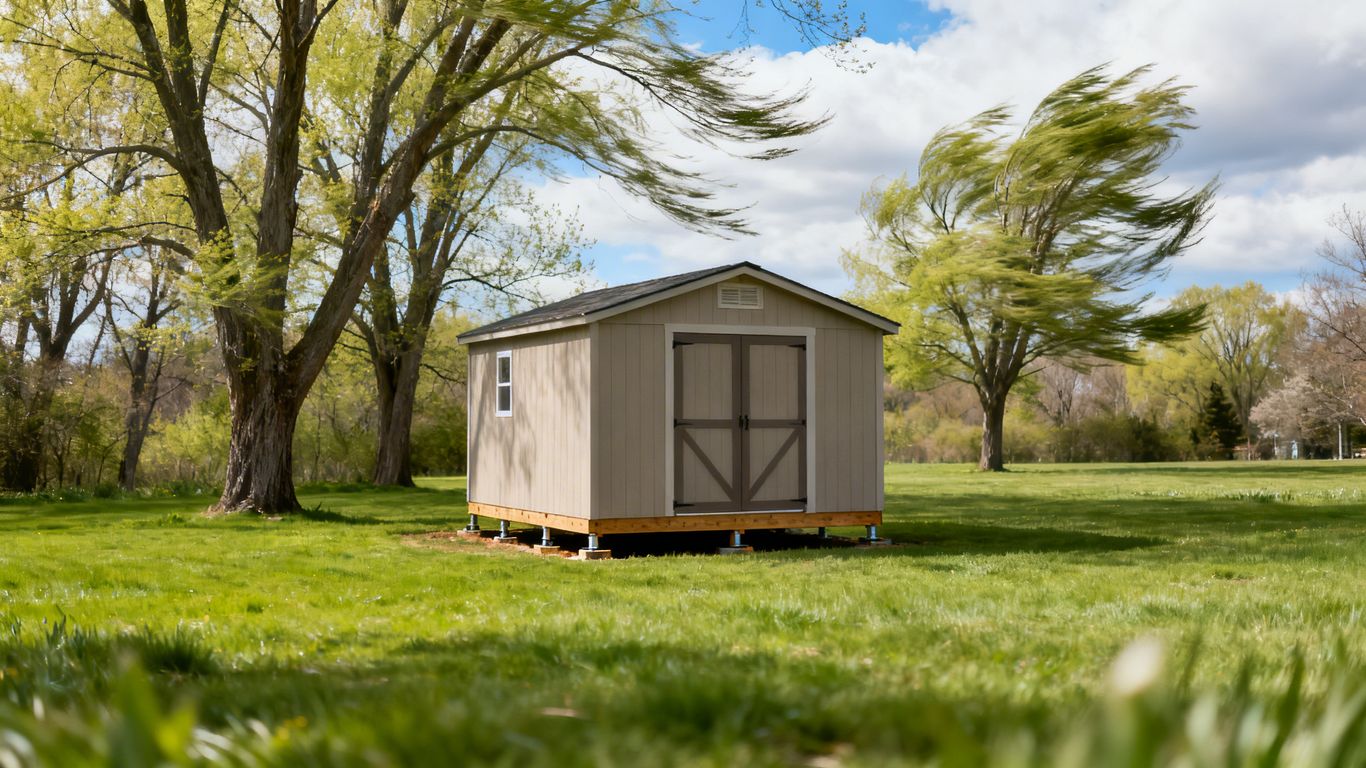
Spring winds can be pretty rough, and putting up a shed when it’s breezy requires some thought. We want our new shed to stay put, right? So, we’ve been looking into the best ways to set it up so it doesn’t get knocked around. It’s all about picking the right spot for wind-resistant shed placement. Let’s figure out how we can get this done right.
Key Takeaways
- When we’re picking a spot for our shed, we should look at what’s already around. Big trees or fences can block some of the wind, making it a safer place for the shed. We need to see what natural windbreaks we have in our yard.
- We should also check how stable the ground is. A shed needs a solid base, especially if it’s going to face strong winds. We don’t want it shifting or sinking over time.
- Thinking about where the wind usually blows from is smart. Placing the shed so it doesn’t take the full force of the wind can make a big difference. Also, putting it near other buildings might offer some extra protection.
Assessing Your Yard For Wind-Resistant Shed Placement
When we’re thinking about putting up a shed, especially with spring winds being so unpredictable, the first thing we need to do is really look at our yard. It’s not just about finding a flat spot; we have to consider how the wind moves around our property. Choosing the right location from the start can save us a lot of trouble down the road.
Identifying Natural Windbreaks
Sometimes, nature gives us a hand. We should look for existing features that can block or slow down the wind. Think about mature trees, dense hedges, or even the side of a sturdy building. These can act as natural barriers. We want to position our shed so it’s somewhat shielded by these elements. It’s like finding a sheltered corner in a park on a breezy day.
- Trees: Larger, well-established trees can significantly reduce wind speed. However, we also need to be mindful of falling branches during storms. So, don’t place the shed too close to older trees that might be a risk.
- Hedges: A thick, healthy hedge can offer good protection. It’s a softer barrier than a wall, but still effective.
- Buildings: The side of your house or another outbuilding can provide a solid windbreak. Just make sure there’s enough space for access and maintenance.
We should also consider what might happen in the future. Will those trees grow taller and offer more protection, or could they become a hazard? Will that hedge fill in nicely?
Evaluating Ground Stability
Wind doesn’t just push against the shed; it can also affect the ground it sits on. We need to make sure the spot we pick is stable. Soft, soggy ground, especially after spring rains, isn’t ideal. We don’t want our shed shifting or sinking over time.
Here’s what we should check:
- Drainage: Does water pool in the area after it rains? Poor drainage can weaken the ground.
- Soil Type: Is the soil mostly clay, sand, or loam? Some soil types hold water more than others, affecting stability.
- Slope: Is the ground level, or does it have a noticeable tilt? A slight slope might be manageable, but a steep one can be problematic.
If the ground seems a bit soft, we might need to do some prep work. This could involve adding a layer of gravel or compacting the soil before we even think about putting the shed base down. It’s better to put in this extra effort now than to deal with a wobbly shed later.
We should also think about how the ground might change throughout the year. Spring is known for its wet weather, so we need to assess stability with that in mind. A spot that looks fine in the dry summer might be a mud pit in April.
Strategic Positioning For Optimal Wind Resistance
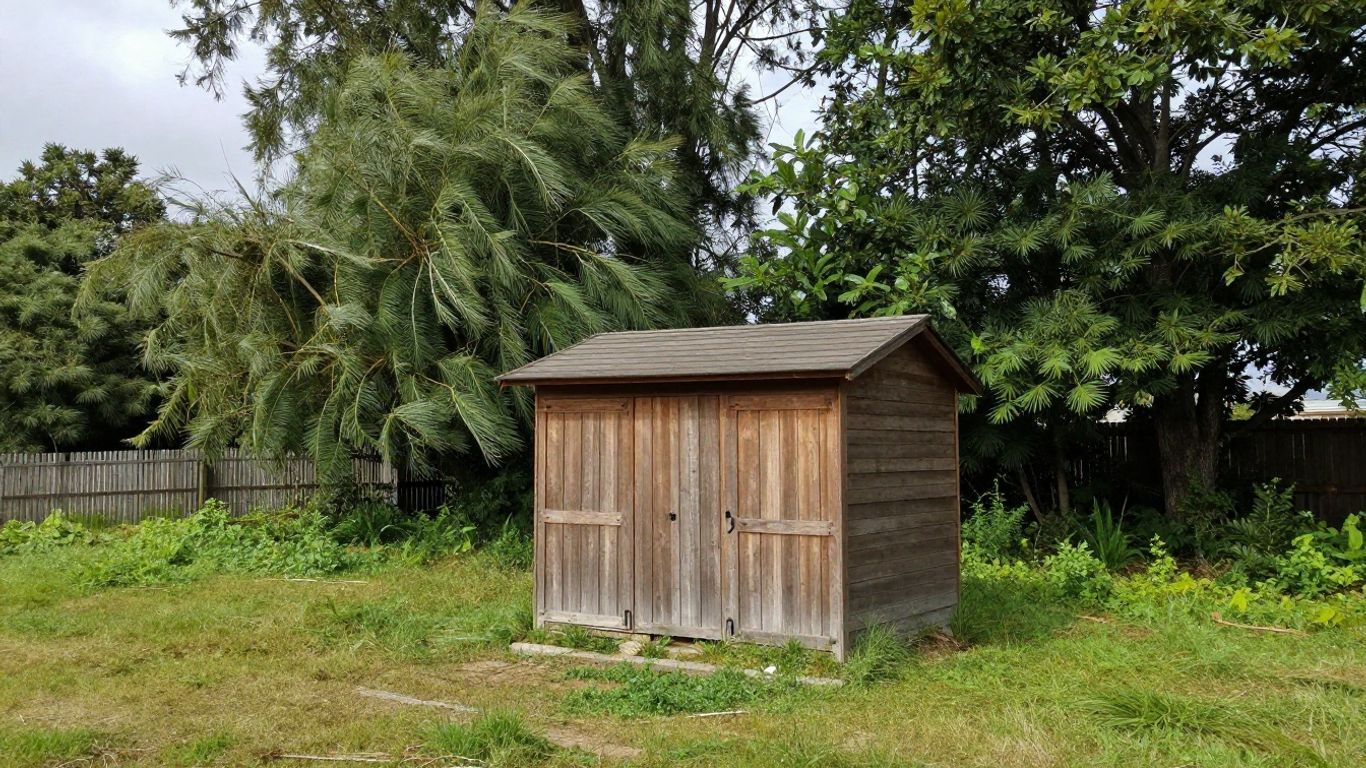
Once we’ve scouted our yard and have a good idea of the natural defenses available, we need to think about where exactly the shed will sit. This isn’t just about aesthetics; it’s about making sure our shed can handle whatever spring winds decide to throw at it. The goal is to make the shed as unnoticeable to the wind as possible.
Minimizing Exposure To Prevailing Winds
We all know spring can bring some blustery days. The first thing we should do is figure out which way the wind usually blows around here during this season. We can often get this information from local weather reports or by simply observing our surroundings over a few weeks. Once we know the prevailing wind direction, we can position the shed so its narrowest side faces into the wind. This presents less surface area for the wind to push against, making it much more stable. Think of it like a boat; you want to cut through the waves, not take them head-on broadside.
Here’s a simple way to think about it:
- Facing the narrow end: Position the shed so its shorter walls are the ones that the wind hits first.
- Avoid wide-open spaces: If possible, don’t put the shed in the most exposed part of your yard.
- Consider the roofline: A lower-profile roof can also help reduce wind resistance compared to a steeply pitched one.
Considering Proximity To Structures
Sometimes, other things in our yard can actually help shield the shed. We should look at any existing buildings, fences, or even dense tree lines. Placing the shed on the leeward side (the side sheltered from the wind) of a larger structure can offer a significant amount of protection. However, we need to be careful here. We don’t want to place it so close that falling branches from a tree, or damage to the other structure during a storm, could impact the shed. It’s a balancing act.
We need to be mindful of how other elements in our yard can either help or hinder the shed’s stability. A little planning now can save us a lot of trouble later when the wind picks up.
We should also think about how the shed might affect airflow around our house or other buildings. While we want protection for the shed, we don’t want to create a wind tunnel effect that could cause problems elsewhere. A good rule of thumb is to maintain a reasonable distance, usually at least a few feet, between the shed and any other permanent structures.
Wrapping Up Our Shed Spot Search
So, we’ve talked about how the wind can really mess with shed placement, especially when spring is blowing hard. Picking the right spot isn’t just about looks; it’s about keeping your shed sturdy and your stuff safe. We looked at how trees and fences can help, and why a level base is a big deal. Take your time when you’re deciding. A little planning now means fewer headaches later when those gusts pick up. We think you’ll find the perfect, sheltered spot for your shed if you keep these ideas in mind.
Frequently Asked Questions
How do we find the best place in our yard to install a shed when it’s windy?
We should look for spots that are protected by fences, trees, or bushes. These natural windbreaks help block strong winds and keep the shed safer. It’s also important to avoid open areas where the wind can hit the shed directly.
Why is it important to check the ground before putting up a shed?
We need to make sure the ground is flat and solid. If the ground is too soft or uneven, the shed might shift or tip over, especially when it’s windy. Stable ground helps keep the shed steady and safe all year.
Can placing a shed close to our house or garage help with wind protection?
Yes, putting the shed near our house or another building can help block some of the wind. The bigger structure acts like a shield, making it less likely for the wind to push the shed around.
Tags: Affordable Sheds, Long Lasting Sheds, Residential Shed Builder