
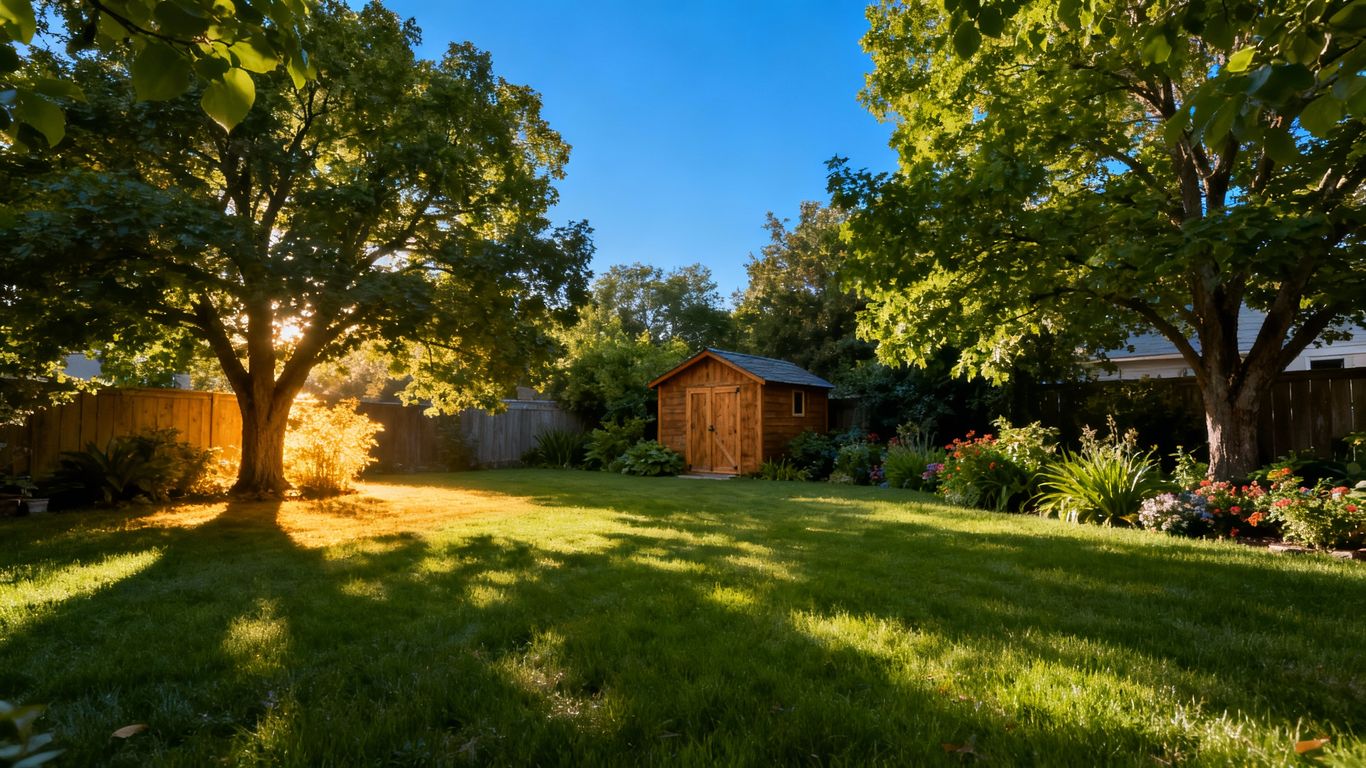
Picking the right spot for our backyard shed can be a bit of a puzzle. We want it to be useful, look good, and not cause any problems with neighbors or local rules. Sometimes, we have to think about things like sunlight, how close it is to the house, and even what the yard looks like during different seasons. Let’s talk about how we can make backyard shed placement work for us without making things harder than they need to be.
Key Takeaways
- Check how much sun and shade the spot gets before setting up the shed, so our stuff inside stays in good shape.
- Look up local building rules and talk to neighbors to avoid any problems with property lines or blocked views.
- Pick a spot that’s easy to get to from the house and fits in with the rest of our yard.
Assessing Sunlight and Shade for Optimal Shed Use
Understanding How Light Affects Shed Contents
Let’s be honest—one thing we easily overlook when planning for a new backyard shed is how much sunlight it’ll get each day. Too much direct sun can really mess with anything we store inside, especially paint cans, gardening tools, and things like seeds or paper. I’ve noticed that even plastic items can warp or fade fast if left in constant sunlight. On the other hand, a completely shaded spot might get damp, which could lead to mildew or rust.
Here’s a quick look at how common items react to different light:
| Shed Content | Direct Sunlight | Full Shade |
|---|---|---|
| Paints & Chemicals | Degrade/evaporate faster | Remain stable, risk of moisture |
| Gardening tools | Handles crack/fade, metal rusts | Stay cool, metal may rust if humid |
| Paper & Fabrics | Fade/disintegrate | More protected, still risk mold |
If we’re storing things that don’t handle heat or light well, keeping the shed out of the afternoon rays might be a good idea. For stuff that’s pretty tough or likes it dry, a brighter spot could actually help.
Positioning the Shed for Seasonal Changes
We also should try thinking beyond just today—seasons change, and so does the sun’s path. In the summer, sunlight falls directly overhead, but as winter comes, it hits at an angle. If we put the shed where a big tree blocks it in the morning but not late afternoon, we might end up with it baking all summer.
Here are a few points we usually consider:
- Watch the sun and shade patterns at different times of day (spend a Saturday checking)
- Take note of trees or buildings that might block or reflect sunlight in winter or summer
- Keep in mind how wind moves—some shade spots also get cold breezes in fall
- Think about how rainwater runs off in shaded areas, which can lead to muddy paths
Even the best shed will start falling apart if it gets too much sun one season and is underwater the next, so let’s take time to watch our backyard before picking the final spot.
With these thoughts in mind, we can figure out where the shed goes so our stuff, and the shed itself, lasts longer.
Navigating Property Lines and Local Regulations
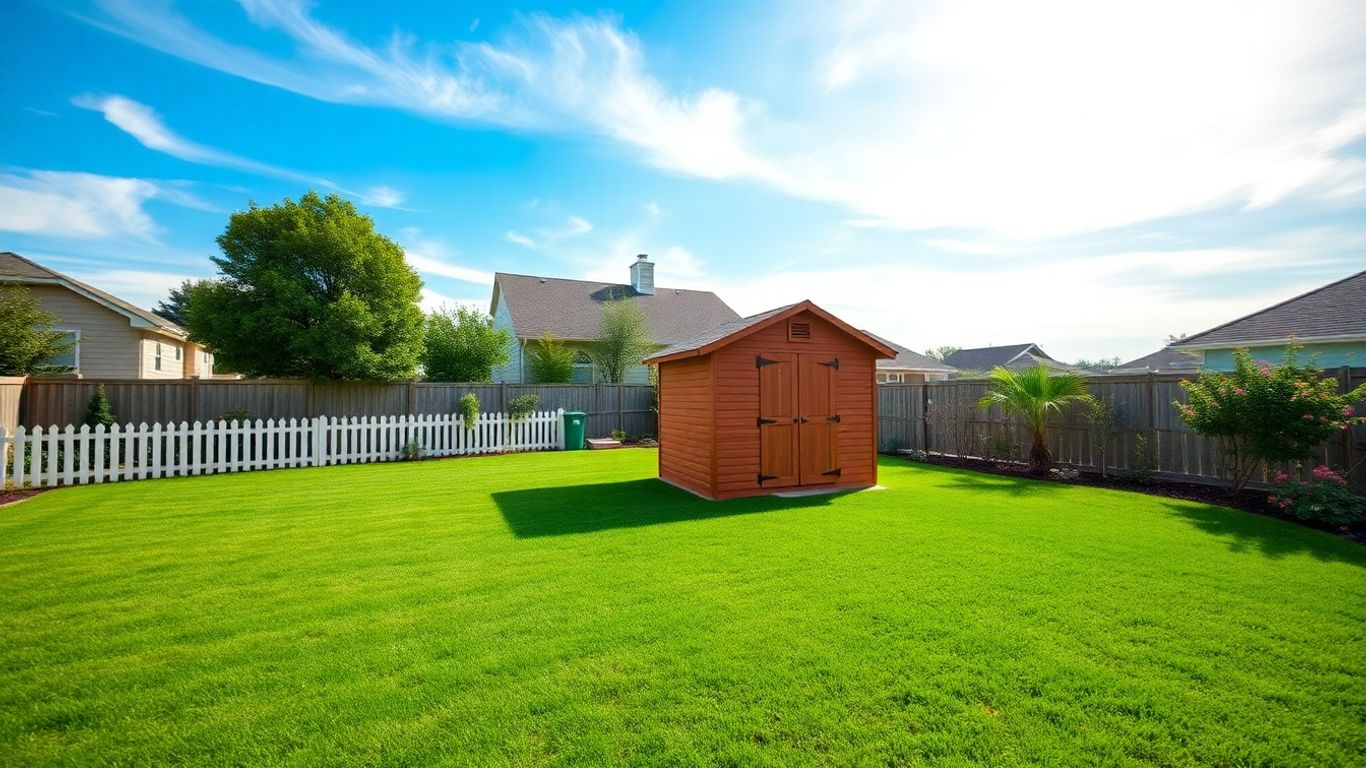
Before we pick a spot for our backyard shed, we really need to think about property lines and all those rules most of us forget until it’s too late. Honestly, skipping this step can mean tearing down your new shed—which is about as fun as it sounds. Let’s talk through what needs our attention.
Complying With Zoning and Building Codes
First thing’s first, let’s check if our city or town has rules about sheds. Most have some kind of zoning or building codes. These can include:
- Minimum distance your shed must be from your property line
- Height restriction for the shed
- Maximum shed size allowed on your lot
| Permit Requirement | Typical Distance to Lot Line | Height Limit |
|---|---|---|
| Often required | 3-10 feet | 10-15 feet |
We should never assume we’re free to build wherever we want. A simple call to the local building department saves a lot of trouble later.
Respecting Easements and Neighbors’ Views
Now, about easements: these are parts of land you technically own but can’t put anything permanent on. They’re often for things like underground cables or for city access.
Here are a few steps we should always take:
- Review our property survey or deed for any marked easements.
- Ask the city about any utility access in our yard.
- Double-check with neighbors so the shed isn’t blocking anyone’s favorite view or light.
- Stay friendly and open with neighbors—this heads off complaints.
- A shed that blocks sunlight to someone’s living room will not win us any friends.
- Remember, some HOAs also set extra rules for sheds.
Checking these rules ahead of time keeps our shed project easy and the neighbor drama to a minimum. Everyone wins, and we get to enjoy our backyard space with zero regrets.
Planning Accessibility and Layout for Backyard Shed Placement
There’s a lot more to shed placement than just figuring out where you have a spare patch of grass. If we want our shed to be truly useful, getting the right spot is half the battle. It’s not just about convenience; good planning can save us time and keep our backyard from looking chaotic.
Ensuring Convenient Access from Your Home
Having a shed that’s easy to get to can make daily routines smoother. When we’re dragging out garden tools or putting away the mower, the difference between a short stroll and a frustrating trek can really add up over time.
Some points to keep in mind:
- Pick a location with a clear, even path from your door
- Avoid putting the shed behind shrubs or fences that you’ll have to walk around
- Think about how you use your yard — do you need room for a wheelbarrow or carts?
A little foresight here means we won’t regret our choice every time we need to grab something in the rain.
Sometimes, what seems like a cozy spot at the edge of the yard ends up being a hassle year-round, especially when everything gets muddy or overgrown.
Integrating the Shed into Your Landscaping Design
It’s easy to let a shed just blend into the background, but if we plan it right, the shed can be a part of the whole look and flow of our yard. When we treat the shed as an intentional piece of the landscape, it won’t stand out awkwardly or ruin our view.
Consider:
- Matching the shed’s style with the house and surroundings
- Leaving space around the shed for future plants, small trees, or flower beds
- Making sure it doesn’t block sightlines or dominate the garden
| Placement Factor | Impact on Backyard |
|---|---|
| Close to House | More easy access, less space for gatherings |
| Near Garden Beds | Handy for tools, may crowd plants |
| Back Corner | Less obtrusive, but may be harder to reach |
Often, we find that thinking about how the shed fits into our whole backyard helps us like the space more every day. A little planning on layout and accessibility is worth the extra effort upfront.
Wrapping Things Up
So, after looking at all the things that go into picking a spot for our backyard shed, it’s clear there’s a lot to think about. We want it to be handy, but not in the way. Sun, shade, and even the slope of the yard all matter more than we might guess at first. We’ve learned that checking local rules and thinking about water runoff can save us headaches later. In the end, if we take our time and plan it out, we’ll end up with a shed that works for us and fits right in. It might take a bit of effort now, but we’ll be glad we did it right when we’re using that shed for years to come.
Frequently Asked Questions
How close can we place our shed to the property line?
Most towns have rules about how far a shed must be from the property line. We should check with our local government or building office for the exact distance. Usually, it is between 5 and 10 feet from the edge of our property.
Do we need a permit to build a backyard shed?
Many places require a permit for sheds, especially if they are large or have electricity. We should always call our city or town office before we start building to find out what rules we need to follow.
What is the best spot in the yard for a shed?
The best spot for our shed is a flat, dry area that is easy to reach. We should also think about how much sunlight or shade the spot gets and make sure it does not block our neighbor’s view or break any local rules.
Tags: Affordable Sheds, Long Lasting Sheds, Residential Shed Builder