
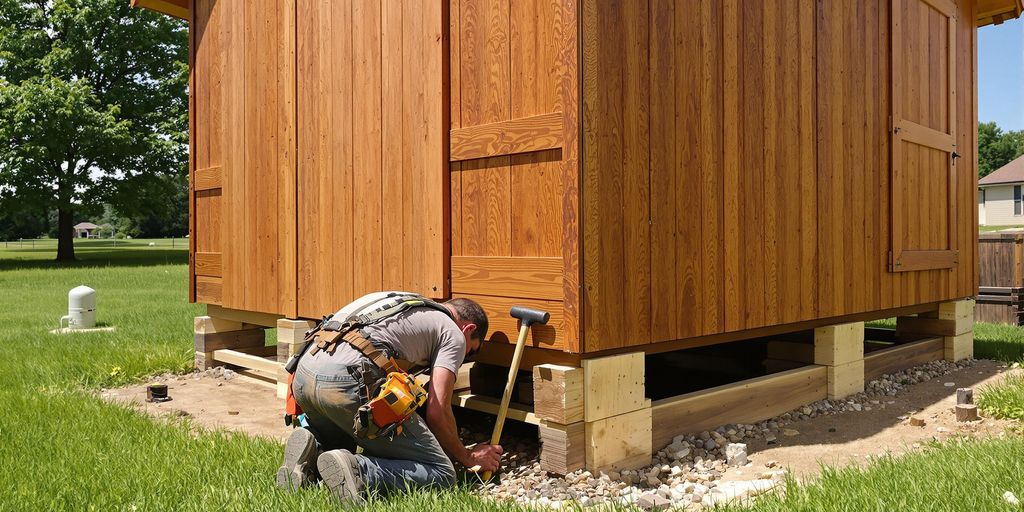
This summer, if you live in Fort Worth, you might notice your backyard shed isn’t quite level anymore. It’s a pretty common issue, but don’t worry, it’s something we can definitely fix. We’re going to walk you through how to get your shed back on solid ground, making sure it stays put for a long time. It’s all about making sure your residential storage shed maintenance is up to par.
Key Takeaways
- Look for signs your shed is uneven, like doors sticking or gaps appearing, to know when it’s time for residential storage shed maintenance.
- Gather all your tools, such as a level, a jack, and shims, before you start working on your shed.
- After leveling, take steps to keep your shed stable and prevent future settling.
Assessing Your Fort Worth Shed’s Foundation
Before we even think about jacking up your shed, we need to figure out exactly what’s wrong. A little prep work here can save us a ton of trouble later. We’re talking about making sure we have the right tools and a clear understanding of the problem. Let’s get started.
Identifying Signs of Unevenness for Residential Storage Shed Maintenance
Okay, so how do we know if our shed is actually unlevel? It’s not always obvious. Here’s what we look for:
- Doors and windows sticking: This is a big one. If your shed door is suddenly hard to open or close, or if the windows are jammed, that’s a sign the frame is warped.
- Gaps between the shed and the ground: Walk around the shed and look for any noticeable gaps between the base and the ground. A small gap is normal, but anything significant indicates settling.
- Visible leaning: Step back and take a good look at the shed. Does it look like it’s leaning to one side? This can be subtle, so pay attention.
- Water pooling: If you notice water pooling around one side of the shed after it rains, that could mean that side is lower than the others.
It’s important to check the entire perimeter of the shed. Sometimes the problem is only on one corner, but other times it’s more widespread. Don’t just focus on the most obvious spot.
Gathering Essential Tools for a Successful Releveling Project
Alright, now that we know what we’re up against, let’s get our tools together. Having the right equipment makes the job way easier and safer. Here’s a list of what we’ll need:
- A long level (at least 4 feet): This is key for making sure the shed is actually level when we’re done.
- A bottle jack or car jack: We’ll use this to lift the shed. Make sure it’s rated for the weight of your shed.
- Wooden shims: These will go under the shed to fill in the gaps and provide support.
- A shovel: For digging around the base of the shed if needed.
- A pry bar: To help lift the shed slightly and get the shims in place.
- Safety glasses and gloves: Safety first!
Having the right tools on hand will make the releveling process much smoother and safer. Don’t try to cut corners here; it’s worth investing in good quality equipment.
Strategic Lifting and Shimming Techniques
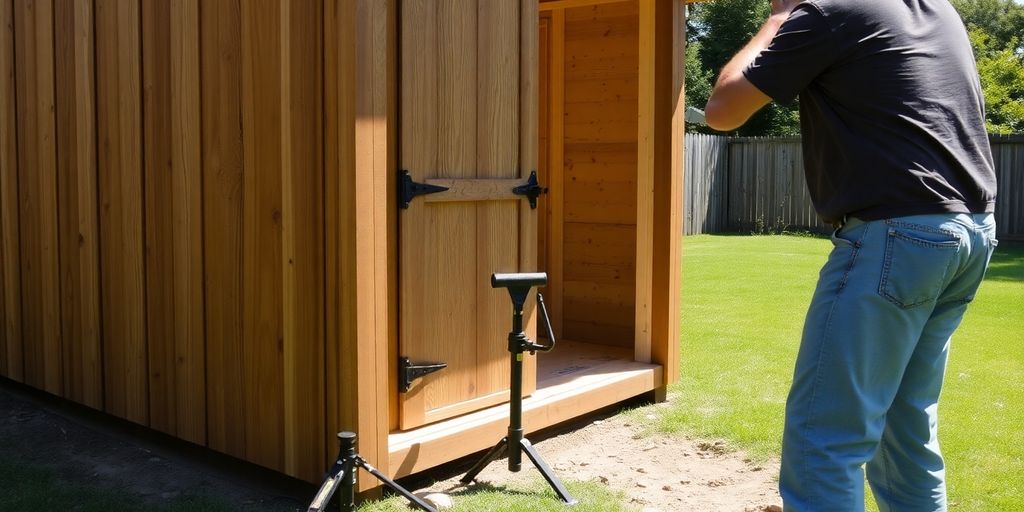
Safely Elevating Your Backyard Structure
Okay, so you’ve figured out your shed is wonky. Now comes the fun part: actually lifting it. This isn’t about brute strength; it’s about being smart and safe. We always start by clearing everything out of the shed. Seriously, everything. Less weight means less risk. Then, we carefully position our bottle jacks. Where you put them depends on the shed’s construction, but usually, the corners are a good bet. Make sure the ground underneath the jacks is solid. Use a piece of plywood if you need to distribute the weight.
Now, the lifting itself. Go slow. Like, really slow. A few inches at a time. Check for any weird creaks or groans. If something doesn’t feel right, stop and reassess. We’re aiming to lift just enough to slide shims underneath, not launch the shed into orbit.
Precision Shimming for Lasting Stability
Shims are your best friends here. These little wedges are what will actually level the shed. We like to use a combination of wood and composite shims. Wood is good for the initial lift, but composite shims are more resistant to rot and moisture, which is a big deal in Fort Worth’s climate. The goal is to create a solid, level base under each corner and along any sagging walls.
Here’s our process:
- Start with the lowest corner.
- Slide shims in, layering them as needed.
- Use a level to check your progress constantly.
- Once one corner is level, move to the next, working your way around the shed.
It’s a bit of a dance, adjusting shims here and there until everything is just right. Don’t be afraid to tap them in with a hammer for a snug fit. Once you’re happy with the level, you can trim any excess shim material with a utility knife or saw. This makes everything look cleaner and prevents tripping hazards.
Remember, patience is key. Releveling a shed isn’t a race. It’s about taking the time to do it right, so your shed stays level for years to come.
Post-Releveling Care and Prevention
Securing Your Shed Against Future Settling
Okay, so we’ve just gone through the whole process of releveling your shed. Great job! But the work doesn’t stop there. We need to make sure this doesn’t happen again anytime soon. One of the best things we can do is to stabilize the soil around the base. Compacting the soil helps a lot. You can rent a plate compactor from most tool rental places. It’s not too hard to use, and it makes a big difference.
Another thing to consider is drainage. If water is pooling around the shed’s foundation, it’s going to cause problems. Make sure your gutters are working properly and that the water is directed away from the shed. You might even want to think about adding some gravel around the base to help with drainage.
Finally, check the surrounding vegetation. Tree roots can be surprisingly strong and can mess with your shed’s foundation over time. If you have any trees nearby, keep an eye on their roots and trim them back if necessary.
Ongoing Residential Storage Shed Maintenance Tips
Regular maintenance is key to keeping your shed in good shape. We should inspect the shed’s foundation at least twice a year, ideally in the spring and fall. Look for any signs of settling or shifting. If you catch it early, it’s much easier to fix.
Here’s a simple checklist we can follow:
- Check for cracks in the foundation.
- Make sure the doors and windows are still level and closing properly.
- Inspect the roof for any leaks or damage.
- Clear away any debris or vegetation that’s growing around the shed.
It’s also a good idea to re-shim the shed every few years, even if it doesn’t seem like it needs it. Over time, the shims can compress or shift, which can lead to unevenness. It’s a relatively easy task, and it can prevent bigger problems down the road.
And don’t forget about the inside of the shed! Keep it clean and organized. This will not only make it easier to find things, but it will also help prevent moisture buildup, which can lead to mold and mildew.
Conclusion
So, there you have it. We’ve gone through the steps to get that shed sitting straight again. It might seem like a big job at first, but taking it one piece at a time really helps. We hope this guide makes the whole process a bit less scary for you. Getting your shed level means it’s safer and will last longer, which is a good thing for any Fort Worth backyard. We know you can do it, and pretty soon, you’ll have a shed that’s ready for anything summer throws at it.
Frequently Asked Questions
When is the best time of year to fix my shed’s level in Fort Worth?
We often find that the best time to tackle this project is during the drier months of summer. Less rain means the ground is more stable, making it easier to work with and ensuring a better long-term fix for your shed.
What tools do we typically need for this kind of shed repair?
For most sheds, you’ll need a good sturdy jack (like a car jack or a bottle jack), some strong wood blocks or shims, a level, and maybe a pry bar. Safety gear like gloves and eye protection are also a must for us.
How can we keep our shed level once we’ve fixed it?
After we’ve leveled the shed, we suggest checking it again in a few weeks, especially after any heavy rains. Also, keeping the area around the shed clear of debris and ensuring good drainage can help prevent future problems for us.
Tags: Affordable Sheds, Long Lasting Sheds, Residential Shed Builder