
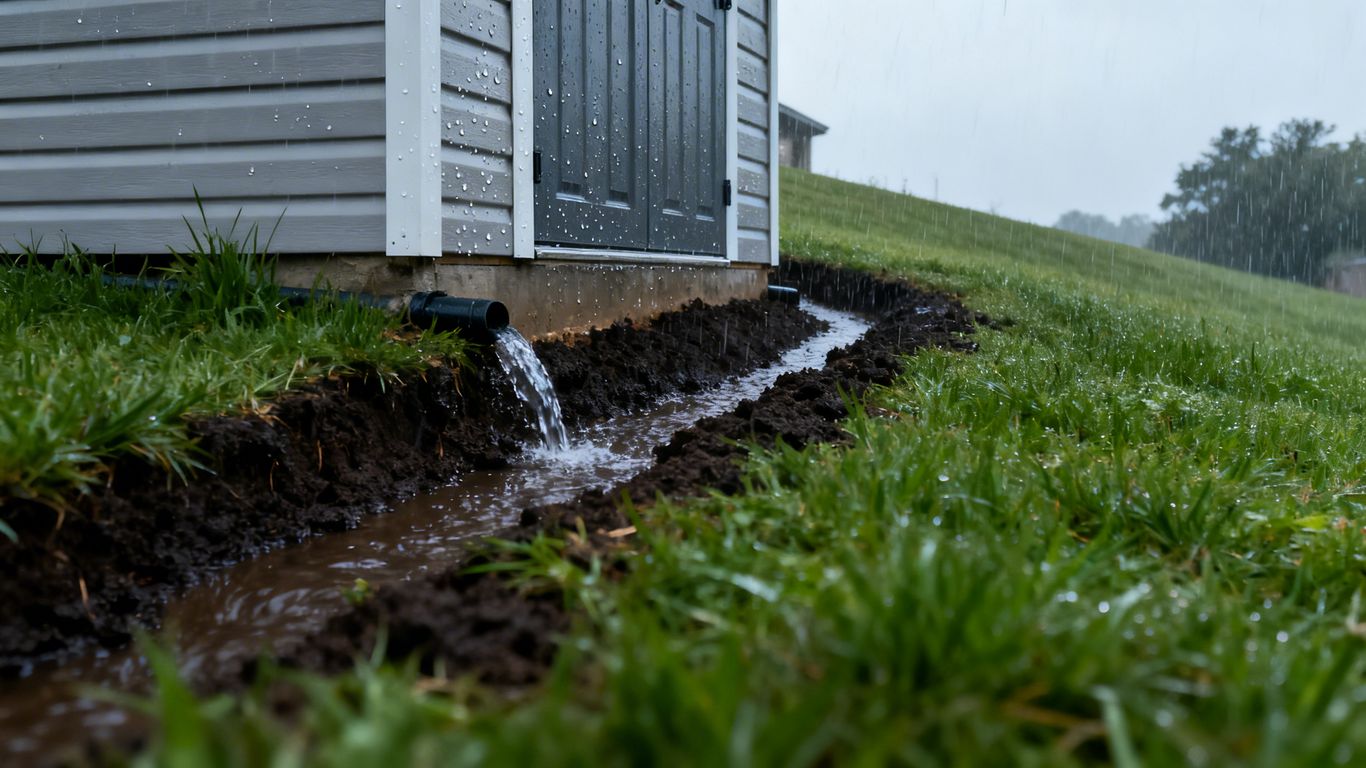
April in Fort Worth can bring a lot of rain, and if you have a storage shed, you might be worried about water damage. We’ve seen firsthand how a little bit of water can turn into a big problem for sheds, especially when it comes to the foundation. We’re going to talk about some simple ways we can make sure our sheds stay dry and sound, even when the skies open up.
Key Takeaways
- Proper grading around your shed is the first step to move water away from the structure.
- Adding gutters and downspouts can direct rainwater away from your shed’s base.
- Consider French drains or other methods if water problems persist, and remember to check your setup regularly.
Understanding Shed Drainage Challenges
We’ve all seen it after a good rain, right? Water pooling around the base of our storage sheds. It’s more than just an annoyance; it can actually cause some real problems for our structures here in Fort Worth, especially when those April showers really start coming down. We need to think about how water moves, or doesn’t move, around our sheds.
Common Water Issues Affecting Fort Worth Sheds
When we talk about water issues, we’re not just talking about a little puddle. We’re talking about water that sits there, seeping into the ground, and potentially weakening the very foundation of our sheds. This can lead to:
- Wood Rot: Constant moisture is a breeding ground for fungi that break down wood. This is a big one for shed walls and floor joists.
- Pest Infestations: Damp environments attract insects like termites and carpenter ants, which can do serious damage.
- Mold and Mildew: Not only is this unpleasant to smell, but it can also affect the items we store inside.
- Corrosion: Metal components, like fasteners or even the shed’s base, can rust and weaken over time.
The biggest culprit is often poor surface drainage. If the ground around your shed slopes towards it, you’re basically inviting water to collect.
The Impact of April Showers on Shed Foundations
April in Fort Worth can bring some serious downpours. These aren’t just light drizzles; they can be intense and prolonged. When this much water hits, it can really test the stability of your shed’s foundation. We’ve seen sheds shift or even settle unevenly because of water buildup.
Water saturation in the soil around a shed foundation can cause the ground to expand. When this saturated soil then dries out, it shrinks. This cycle of expansion and contraction puts stress on the foundation, leading to cracks or instability over time.
Think about it: the ground beneath your shed is like a sponge. When it gets soaked, it can lose its ability to support the weight evenly. This is particularly true for sheds that aren’t built on a very robust foundation. We need to make sure that water has a clear path away from the shed, not pooling around it or soaking into the ground right next to the walls.
Implementing Effective Drainage Solutions for Storage Sheds
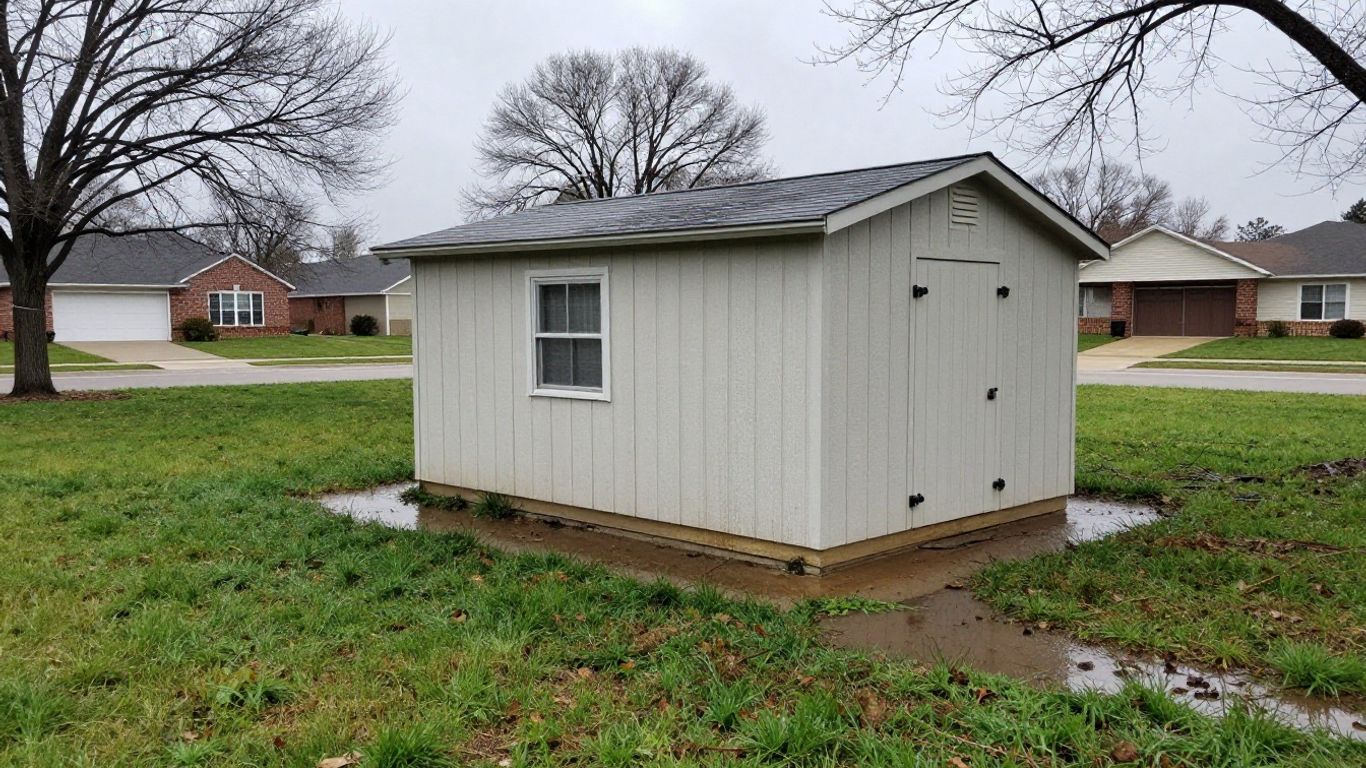
We’ve all seen those soggy spots around our sheds after a rainy week in Fort Worth. Standing water is more than just an eyesore—it can end up causing real damage if we’re not careful. Let’s talk about some things we can do to keep our storage sheds dry and steady, even when the April showers seem like they’ll never stop.
Grading Techniques for Optimal Water Runoff
Getting the ground to slope away from our shed is one of the best things we can do to control water. If water flows toward the foundation, we’re just asking for trouble. Here’s how we work with grading:
- Slope the ground at least 5% (that’s about 6 inches of drop for every 10 feet) away from the shed.
- Fill low spots with extra soil—clay works well because it doesn’t let water move through quickly.
- Check that the slope stays intact every spring, especially after heavy rain.
| Slope Percentage | Drop Per 10 Feet | Effective for Runoff |
|---|---|---|
| 2% | ~2.5 inches | Low/Minimal |
| 5% | 6 inches | Ideal |
| 10% | 12 inches | Only for flood zones |
If we skip this step, water collects where we don’t want it. Taking just a little time to check the grading goes a long way.
Gutter and Downspout Systems for Shed Protection
Adding gutters might seem like overkill for a small building, but we’ve found it’s worth it. Gutters redirect rainwater, keeping it off the walls and out of the foundation. The key things we keep in mind:
- Install gutters at the roof’s edge, making sure they angle slightly so water flows, not pools.
- Downspouts should carry water at least four feet away from the shed, or connect to a drainage pipe.
- Make sure nothing blocks the downspouts—leaves or dirt can clog them real quick.
We’ve noticed that pairing good grading with a simple gutter and downspout setup makes April rains a lot less stressful for any shed owner.
These steps work together—grading, gutters, and downspouts help keep our sheds in shape, even when it’s pouring outside. It doesn’t have to be complicated. Just some regular checking and simple changes can save a ton of trouble later.
Advanced Drainage Solutions and Maintenance
French Drains and Other Subsurface Solutions
Sometimes, surface drainage just isn’t enough—especially after a week of those steady April rains in Fort Worth. When our shed area still ends up with soggy ground or standing water, we start looking at more serious fixes like French drains. A French drain works by redirecting water away from our shed’s foundation before it has the chance to pool. We dig a sloped trench, line it with gravel, and install a perforated pipe to channel water away.
There are also other subsurface ideas worth considering, such as:
- Dry wells that collect and slowly disperse water underground
- Perforated pipes around the shed perimeter
- Soakaway pits if space allows
These buried solutions work well for those problem spots where water just keeps coming back, no matter how carefully we grade.
When we take the time to install subsurface drainage, we reduce the risk of soggy floors, mold, and shifting shed structures after every heavy rain.
Regular Maintenance for Lasting Drainage
Even the best drainage set-up around a shed will only work if we keep up with simple, regular care. Here’s a quick rundown of what we typically check, especially during the rainy spring months:
- Inspect gutter systems for leaves, dirt, and blockages
- Make sure downspouts are angled away from the shed
- Rake away debris and built-up mulch near the foundation
- Check for standing water around the shed after every big storm
| Task | How Often |
|---|---|
| Clean gutters | Monthly |
| Test French drain flow | Every 3 months |
| Remove debris | After each rain |
| Inspect for erosion | Monthly |
We’ve learned that a little effort in regular maintenance goes a long way. With the right mix of good drainage design and upkeep, our shed stays dry and usable, even through unpredictable Fort Worth spring weather.
Keeping Your Shed Dry This Rainy Season
So, we’ve talked about how important it is to get the grading right around your storage shed, especially with all the April showers we get here in Fort Worth. A little bit of work now can save you a lot of headaches later, like soggy floors or even structural damage. We want to make sure our sheds stay in good shape, and that means paying attention to how water flows away from them. Taking these steps will help protect your belongings and keep your shed standing strong, year after year. It’s really about being proactive and giving your shed the best chance to withstand the weather.
Frequently Asked Questions
Why does water seem to collect around our shed, especially after it rains a lot in Fort Worth during April?
Often, water gathers around sheds because the ground slopes the wrong way, or the soil can’t soak up the rain fast enough. When April brings those heavy showers, the water doesn’t know where else to go, so it pools up. This can be a problem for the shed’s base, making it unstable over time.
What’s the easiest way to make sure rain runs away from our shed instead of towards it?
One simple trick is to make sure the ground around your shed slopes away from it. We call this grading. Imagine building a tiny hill around the shed so that when it rains, the water naturally flows downhill, far from the shed’s foundation. Adding gutters and a downspout can also help direct rainwater away.
Are there special ways to handle lots of water if just grading isn’t enough for our shed?
Yes, there are. If grading alone doesn’t solve the problem, we can look into things like French drains. These are basically underground trenches filled with gravel and a pipe that collect water and carry it away from the shed. Keeping an eye on these systems and clearing out any leaves or dirt regularly is key to making sure they keep working well.
Tags: Affordable Sheds, Long Lasting Sheds, Residential Shed Builder