
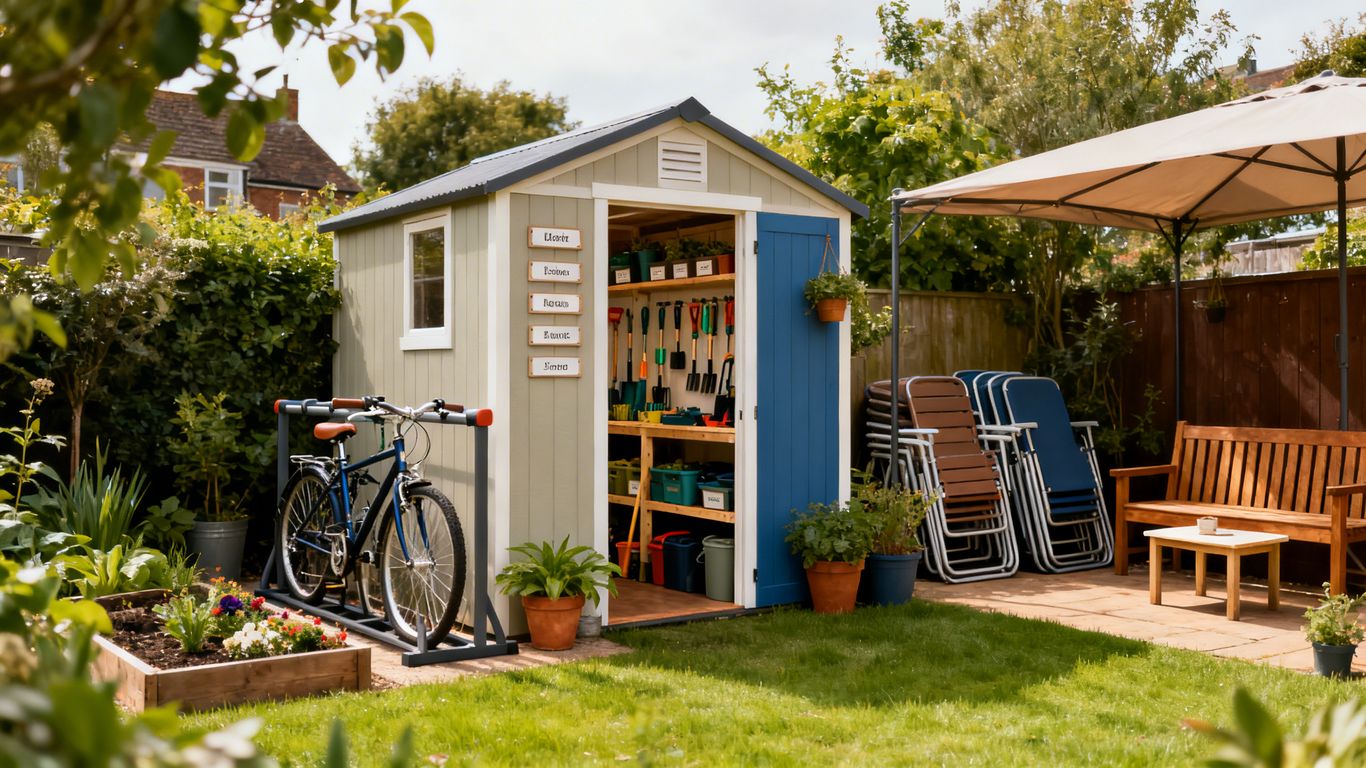
We often find ourselves with yards that aren’t exactly sprawling. But that doesn’t mean we can’t make the most of them. Our backyards can be so much more than just a patch of grass. With some thought about custom storage shed designs, we can really transform these smaller outdoor spaces. We’ll look at how to fit everything we need into a shed, making it work for us.
Key Takeaways
- We can fit a lot into a small yard by planning our shed’s layout carefully to match the yard’s shape and size.
- Using the shed’s height with shelves and hooks helps us store more things without taking up floor space.
- We can make our sheds useful for more than just storage by setting up specific spots for our hobbies or projects.
Optimizing Your Space With Custom Storage Shed Designs
When we look at our backyards, it’s easy to see them as just patches of grass or places for the kids to run around. But with a bit of thought, we can make them work harder for us, especially when it comes to storage. A custom shed isn’t just a box to shove things into; it’s an opportunity to really organize our lives and make the most of every square foot we have. Thinking about a shed as a flexible storage unit, rather than a static building, is key.
Tailoring Shed Layouts to Your Yard’s Unique Dimensions
We often buy sheds off the lot, and they end up looking a bit out of place or just not fitting the flow of our yard. But what if we designed them specifically for our space? This means looking at the shape of our yard, where the sun hits, and how we actually use the outdoor area. Is there a narrow strip of land perfect for a long, skinny shed? Or maybe a corner that’s always in shadow, ideal for storing garden tools? We need to measure carefully and consider how the shed will sit without blocking pathways or making the yard feel cramped.
- Measure your yard accurately: Don’t guess. Use a tape measure for length, width, and any awkward angles.
- Note sun and shade patterns: This affects where you might want to store certain items and how the shed itself will be affected by heat.
- Consider access points: How will you get to the shed? Make sure there’s clear, easy access from your house or garden.
- Think about existing features: Are there trees, fences, or slopes that will influence placement?
Integrating Smart Storage Solutions for Maximum Efficiency
Once we’ve figured out where the shed will go and its basic shape, we need to think about what goes inside. Just having a big empty space isn’t very helpful. We need to plan for storage from the start. This means thinking about the types of things we’ll be keeping in there. Are we storing bulky garden equipment, sports gear, or maybe seasonal decorations? Each item has different storage needs.
We often fill sheds with things we don’t use often, pushing aside the items we need daily. A well-designed shed layout means the things we reach for most are easy to grab, while less-used items are still accessible but out of the way.
Here are some ideas for smart storage:
- Adjustable shelving: This is a game-changer. Instead of fixed shelves that might be too tall or too short, adjustable ones let us customize the space for different-sized items.
- Wall-mounted organizers: Think pegboards for tools, hooks for hoses, and racks for long-handled items. This gets things off the floor and utilizes the vertical space.
- Modular bins and drawers: These can be stacked, labeled, and easily rearranged as our storage needs change. They keep smaller items tidy and prevent clutter.
Creating Functional Zones Within Your Backyard Shed
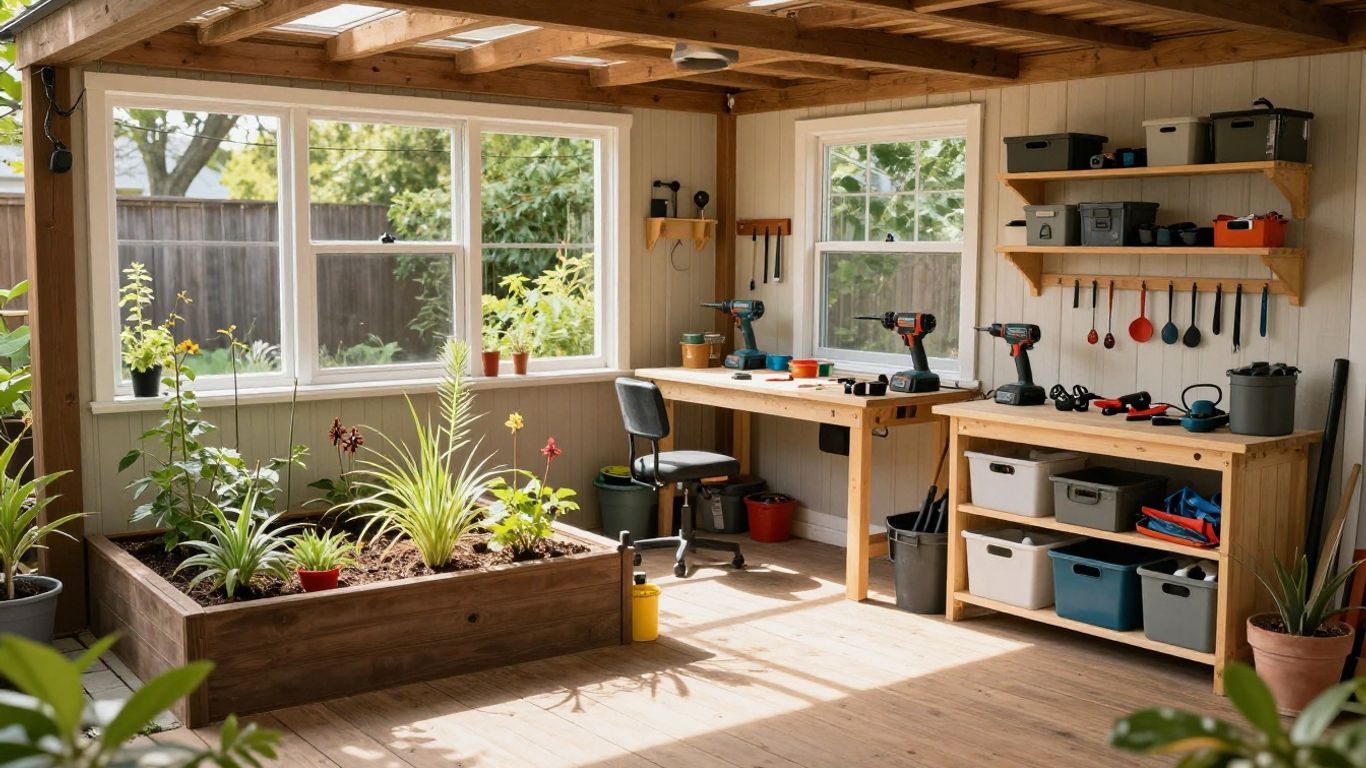
Designing Dedicated Areas for Hobbies and Work
When we think about our sheds, it’s easy to just see one big space. But we can really make them work better by dividing them up. Think about what you actually do in your shed. Are you a gardener who needs a potting bench and tool storage? Maybe you’re a crafter who needs a clear workspace for projects. Or perhaps you need a quiet spot for remote work. We can create distinct zones within the shed to suit these different needs. For example, one corner could be set up as a small office with a desk and good lighting, while another area is dedicated to storing gardening supplies, complete with shelves for pots and bags of soil. This way, everything has its place, and we avoid that cluttered feeling.
Implementing Vertical Storage and Shelving Strategies
One of the biggest challenges in small spaces is floor area. We often forget about the walls! Using vertical space is key to maximizing storage. We can install sturdy shelving units, pegboards, or even simple hooks to hang tools and equipment. Think about how high we can go. Even the space above a workbench can be used for shallow shelves to store smaller items.
Here are some ideas for vertical storage:
- Pegboards: Great for hanging tools, craft supplies, or even small garden implements. We can arrange them however we like.
- Wall-mounted shelves: Install shelves at different heights for storing larger items like paint cans, storage bins, or gardening equipment.
- Overhead storage: Consider adding a loft or a simple shelf near the ceiling for seasonal items or things we don’t use often.
We found that by really looking at the height of our shed, we could fit in so much more than we initially thought. It’s amazing how much unused space there is just waiting to be utilized.
We can also use modular shelving systems that allow us to adjust the shelf height as our needs change. This flexibility is really helpful. For items we use frequently, like hand tools or frequently used craft supplies, keeping them on easily accessible shelves or pegboards makes a big difference in our daily workflow. It’s all about making the shed work for us, not against us.
Wrapping It Up
So, we’ve looked at how a well-planned shed can really change things for a small yard. It’s not just about having a place to put stuff; it’s about making that space work for us. By thinking about custom layouts and setting up specific storage zones, we can get a lot more out of our limited outdoor area. We hope these ideas give you a good starting point for your own yard. It might take a little effort to figure out what works best, but the payoff in a tidier, more useful yard is totally worth it. Go ahead and give it a try.
Frequently Asked Questions
How can we make the most of a small backyard with a shed?
We can really make a small yard feel bigger and more useful by planning our shed carefully. It’s all about fitting the shed shape to the yard’s exact size and shape. We should also think about clever ways to store things inside so everything has its place and we don’t waste any room. Imagine having a spot for everything, from garden tools to outdoor games!
What are some good ways to organize the inside of our shed?
To keep our shed tidy and functional, we can divide the space into different areas. For example, we might set up one corner for gardening supplies and another for sports equipment. Using the walls is key, too! We can put up shelves and hooks high up to store things we don’t use every day, freeing up floor space for bigger items or even a small workbench for projects.
Is it worth getting a custom shed layout for a small yard?
Absolutely! While a standard shed might not fit perfectly, a custom layout means we get a shed that’s designed just for our yard. This helps us use every inch of space we have. It’s like getting a perfect-fitting puzzle piece for our backyard. Plus, when we plan the storage zones from the start, the shed becomes a super useful extension of our home, not just a place to dump stuff.
Tags: Affordable Sheds, Long Lasting Sheds, Residential Shed Builder