

We’re looking at how to design a custom storage shed that works well all year long. It’s not just about having a place to put things; it’s about making that space useful no matter the season. We want our custom storage sheds to be practical and adaptable, so we’ll cover some ideas for making that happen.
Key Takeaways
- When planning your custom storage sheds, think about the local weather. What works in a hot place might not be great in a cold one, and vice versa. We need to pick materials and designs that can handle what our area throws at them.
- Good airflow and keeping the temperature steady inside are important. We’ll talk about how to set up vents and add insulation to make sure things inside stay protected from extreme heat or cold.
- Making the most of the space inside is key. We’ll explore ways to organize for different seasonal gear, like gardening tools in the summer and holiday decorations in the winter. Adding power and lights can also make the shed much more useful.
Tailoring Your Custom Storage Shed for Year-Round Use
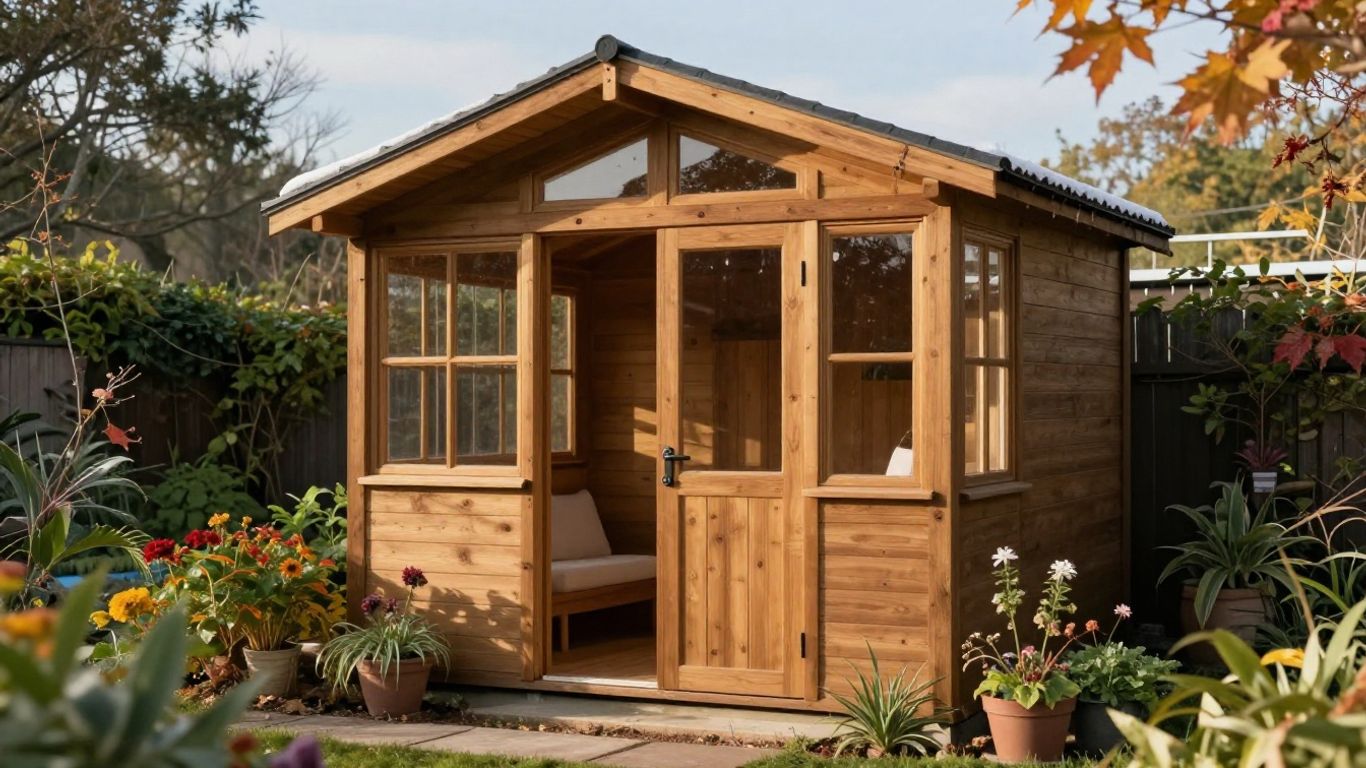
When we think about building a custom shed, it’s easy to focus on just the storage aspect. But if we want our shed to be truly useful throughout the entire year, we need to consider how it will perform in different weather. This means looking beyond just the size and shape and thinking about the materials and design choices that will keep our belongings safe and sound, no matter the season.
Climate-Specific Design Considerations
Our location plays a big role in how we should build our shed. A shed in a place with heavy snow needs a stronger roof than one in a milder climate. Likewise, areas with high humidity or lots of rain require different approaches to prevent moisture damage. We should think about:
- Roof Pitch: A steeper roof helps shed snow and rain more effectively, reducing the risk of leaks or structural stress.
- Foundation: A solid foundation prevents shifting, especially in areas with freeze-thaw cycles. We might consider a concrete slab or a robust pier system.
- Material Durability: Choosing materials that can stand up to local conditions, like UV-resistant siding or rot-resistant wood, makes a big difference.
- Wind Resistance: In windy areas, we need to make sure our shed is built to withstand strong gusts, perhaps with extra bracing.
Optimizing Ventilation and Insulation
Keeping the inside of the shed at a stable temperature and dry is key for protecting stored items. Without good airflow, moisture can build up, leading to mold and mildew, especially on things like lawn furniture or gardening tools. Proper ventilation prevents this buildup and keeps the air fresh.
- Ventilation: We can add vents near the roofline and lower down on the walls. This creates a natural airflow that moves hot air out and cooler air in. Ridge vents and gable vents are common options.
- Insulation: Adding insulation, similar to what we might use in a house, can make a huge difference. It helps keep the shed cooler in the summer and warmer in the winter. This is especially important if we plan to store sensitive items like paints or electronics.
- Vapor Barrier: A vapor barrier, like plastic sheeting, installed under the siding and roofing materials, helps stop moisture from getting into the shed’s structure.
We need to remember that a shed isn’t just a box; it’s a structure that needs to work with its environment. Thinking about these details upfront saves a lot of trouble later on. It’s about making smart choices now that pay off all year long.
Enhancing Functionality in Custom Storage Sheds
When we think about our custom storage sheds, it’s not just about keeping things out of the weather. We want them to work for us, making our lives easier throughout the year. This means looking beyond just space and considering how we actually use the shed and what we store in it.
Smart Storage Solutions for Seasonal Items
We all have things that come out only a few times a year. Think about holiday decorations, summer patio furniture cushions, or winter sports gear. A well-designed shed can make getting these items in and out a breeze, rather than a chore. We’ve found that good shelving is key. Adjustable shelves are great because they can be moved up or down to fit different-sized bins or equipment. We also like using clear plastic bins so we can see what’s inside without pulling everything out. For bulky items like kayaks or ladders, overhead storage racks can free up valuable floor space. Don’t forget about smaller items; pegboards are fantastic for hanging tools, garden implements, or even craft supplies. Thinking about how you’ll access items is just as important as how you store them.
Here are a few ideas we’ve implemented:
- Vertical Storage: Use wall space with shelves, cabinets, and pegboards.
- Categorization: Group similar items together. Holiday lights go with other decorations, gardening tools with other garden supplies.
- Accessibility: Place frequently used items on lower shelves or in easily reachable spots.
- Protection: Use airtight containers for fabrics or anything susceptible to pests or moisture.
Integrating Power and Lighting
Adding power and light to your shed can really change how you use it. Imagine not fumbling around in the dark to find something or being able to plug in a small heater or fan. It opens up possibilities for using the shed as a workshop, a potting area, or even just a more comfortable place to organize.
We’ve found that running power requires a bit of planning, often involving a qualified electrician to do it safely. But once it’s in, it’s a game-changer. Simple overhead LED lights are efficient and bright. We also like adding task lighting, like a flexible lamp over a workbench, for detailed work. For power, consider a few outlets for tools, chargers, or seasonal lighting. If you’re thinking about heating or cooling, make sure the shed’s insulation is up to par first.
Adding electricity and good lighting transforms a shed from a simple storage box into a functional extension of our home. It makes tasks easier and the space more pleasant to be in, regardless of the time of day or season.
Here’s a quick look at what we considered for power and lighting:
- Lighting Needs: General overhead light, plus task lighting where needed (e.g., workbench).
- Power Outlets: Number and placement based on intended use (tools, charging, etc.).
- Safety: Proper wiring, GFCI outlets if near potential moisture, and circuit protection.
- Energy Efficiency: LED bulbs and considering timers or motion sensors for lights.
Wrapping Up Your Versatile Shed Project
So, we’ve gone through the steps to design a shed that works for you all year round. It’s not just about having a place to store things; it’s about making that space useful no matter the season. Think about how you’ll use it in the summer versus winter, and plan accordingly. We hope this guide helps you build a shed that truly fits your needs. Building something custom can feel like a big task, but the end result is a space that’s perfectly suited to your life. Go ahead and start planning – your adaptable shed awaits!
Frequently Asked Questions
How can we make our shed work well in different weather all year?
To ensure our shed is useful no matter the season, we should think about the local weather. For hot places, we’ll want good airflow to keep things cool. If it gets cold, we need to add insulation to keep the heat in and the cold out. We can also choose materials that won’t get damaged by sun or snow.
What are some clever ways to store things in our shed, especially stuff we only use sometimes?
We can use shelves, hooks, and special organizers to keep things tidy. For seasonal items like holiday decorations or gardening tools, we can use clear bins so we know what’s inside. Hanging things up is also a great idea to save floor space. Thinking about how we use things throughout the year helps us set up the best storage.
Is it possible to add electricity and lights to our custom shed?
Yes, absolutely! We can have an electrician run power to the shed. This lets us use lights, fans, or even small tools. Having lights makes it much easier to find things, especially when it gets dark early in the winter. It really makes the shed more useful.
Tags: Affordable Sheds, Long Lasting Sheds, Residential Shed Builder