
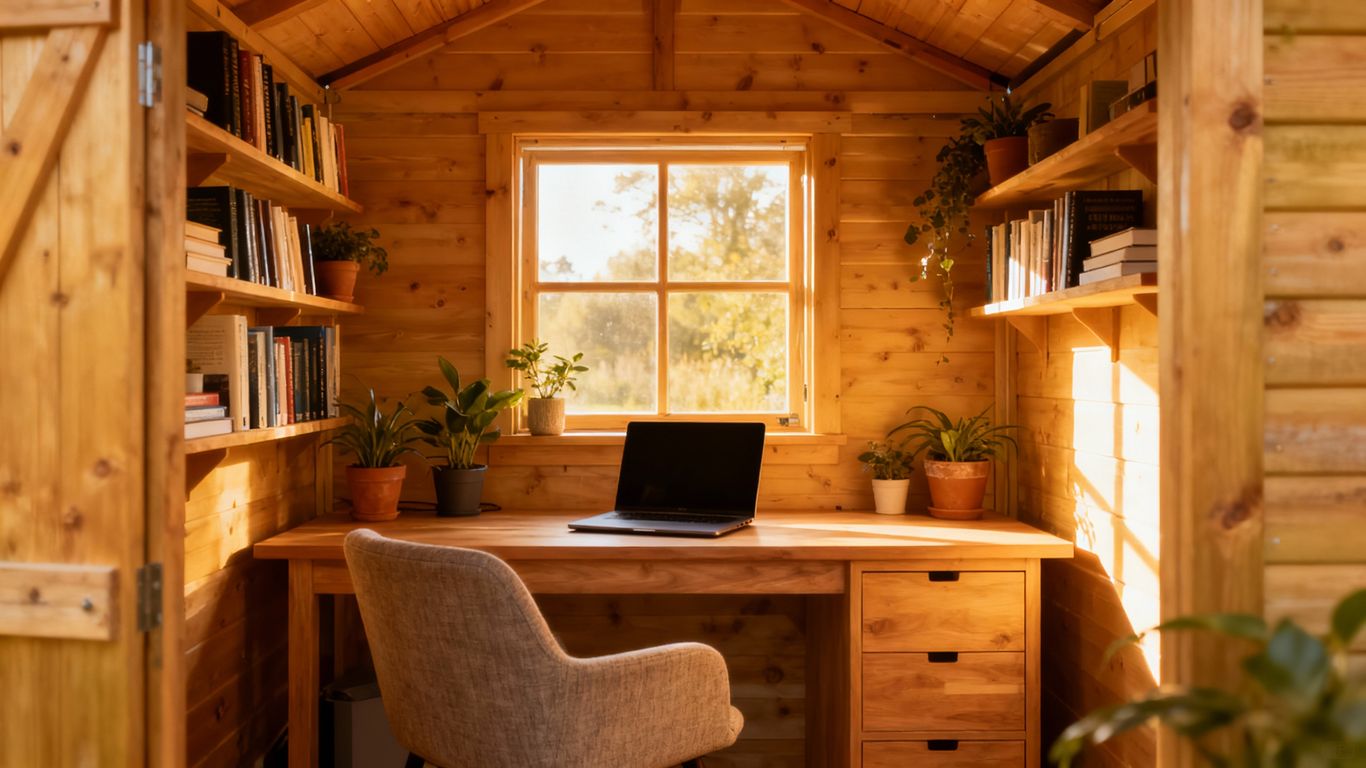
We’ve all thought about it, haven’t we? That old shed in the backyard, just sitting there. It’s time we stopped seeing it as just a place for garden tools and started seeing its potential. We can turn that space into a proper work area, a place where we can focus without the distractions of the house. Let’s explore how we can make our very own backyard office shed a reality.
Key Takeaways
- When planning your backyard office shed, think about how the space will be used. Map out where your desk, storage, and any other items will go to make sure it flows well for work.
- Making your backyard office shed comfortable means looking at things like temperature and light. Good insulation and the right lighting make a big difference in how pleasant it is to work there.
- The final touches for your backyard office shed involve picking furniture that feels good to use for long periods and adding personal items to make it feel like your own space.
Designing Your Backyard Office Shed
Before we get too far into making our sheds into offices, we need to do some planning. It’s not just about slapping a desk in there and calling it a day. We need to think about how we’ll actually use the space and where it will fit best.
Planning The Layout For Productivity
When we’re thinking about the inside of the shed, the layout is key. We want to set it up so we can get work done without feeling cramped or distracted. Think about where the desk will go. Should it face a window? Or maybe face the door? It really depends on what helps us focus. We also need to consider storage. Piles of papers or equipment can make any space feel messy and hard to work in. So, we should plan for shelves, cabinets, or even some wall-mounted organizers.
Here are a few layout ideas to get us started:
- Linear Layout: Desk along one wall, with storage on the opposite wall. Good for long, narrow sheds.
- Corner Layout: Desk tucked into a corner, freeing up the center of the room. Works well for square sheds.
- Open Plan: Minimal furniture, focusing on a large central desk area. Best if we don’t have a lot of stuff to store.
We also need to think about movement. Can we walk around easily? Is there enough space to open drawers and doors without hitting anything? A well-planned layout makes a big difference in how productive we feel.
Choosing The Right Location For Your Backyard Office Shed
Where we put the shed matters a lot. We want a spot that’s convenient but also offers some peace and quiet. Consider how far it is from the house. Too close, and we might be tempted to pop back inside for every little thing. Too far, and a quick trip for a coffee might feel like a trek.
Think about these points when picking a spot:
- Privacy: Is the location shielded from street noise or neighbors’ activities?
- Access: How easy is it to get to the shed, especially in bad weather?
- Sunlight: Does the location get good natural light without too much glare on our computer screen?
- Utilities: How far are we from electrical hookups or water if we need them?
We should also look at the ground where the shed will sit. A level spot is important for stability and to prevent water from pooling around the base. If the ground isn’t quite right, we might need to do some minor leveling work before the shed even goes in place.
Sometimes, the best spot might be a bit further back in the yard, maybe near some trees or a fence line. This can give us a real sense of separation from the main house, which is great for focus. We don’t want to feel like we’re still in the middle of everything when we’re trying to get work done.
Essential Upgrades For A Comfortable Workspace
Turning a simple shed into a place where we can actually get work done requires more than just a desk and a chair. We need to think about making it a space that’s comfortable year-round, regardless of what’s happening outside. This means tackling a few key areas.
Insulation And Climate Control
Let’s be honest, most sheds aren’t built with comfort in mind. They’re often just wood and a roof, letting in drafts in the winter and becoming saunas in the summer. Proper insulation is probably the single most important upgrade we can make. It’s not just about staying warm or cool; it’s about creating a stable environment where our equipment doesn’t get too hot or too cold, and where we don’t get distracted by feeling uncomfortable.
We can approach insulation in a few ways:
- Fiberglass Batts: This is a common and relatively affordable option. We’d roll it out between the studs and joists. It’s good for sound dampening too.
- Rigid Foam Boards: These are great for adding a solid layer of insulation, especially if we’re worried about moisture. They can be cut to fit snugly.
- Spray Foam: While more expensive, spray foam offers excellent insulation and seals up air leaks really well. It’s a more professional job, though.
Once insulated, we need to think about heating and cooling. A small electric heater or a mini-split system can make a huge difference. For ventilation, opening windows is good, but a small exhaust fan can help keep the air fresh, especially if we’re doing any crafting or using electronics that generate heat.
Making the shed a comfortable temperature means we’re more likely to spend time in it working. It stops us from making excuses to go back inside the main house.
Lighting And Electrical Considerations
Working in a dim, gloomy space is a recipe for headaches and low productivity. We need good lighting. Natural light is fantastic, so if we can add or enlarge windows, that’s a big plus. But we’ll also need artificial light.
Here’s what we should consider for lighting and power:
- Overhead Fixtures: A couple of bright LED ceiling lights will provide general illumination. We want something that mimics daylight as much as possible.
- Task Lighting: A desk lamp or adjustable floor lamp is great for focusing light where we need it for reading or detailed work.
- Power Outlets: We’ll need enough outlets for our computer, monitor, phone charger, and maybe a printer or other devices. Running a dedicated electrical line from the house is the safest and most reliable way to get power. We’ll want to make sure it’s up to code and handled by someone who knows what they’re doing.
We should also think about internet connectivity. Running an Ethernet cable is ideal for a stable connection, but a good Wi-Fi extender might do the trick if that’s not feasible. Having reliable power and internet is non-negotiable for a functional workspace.
Furnishing And Decorating Your New Office
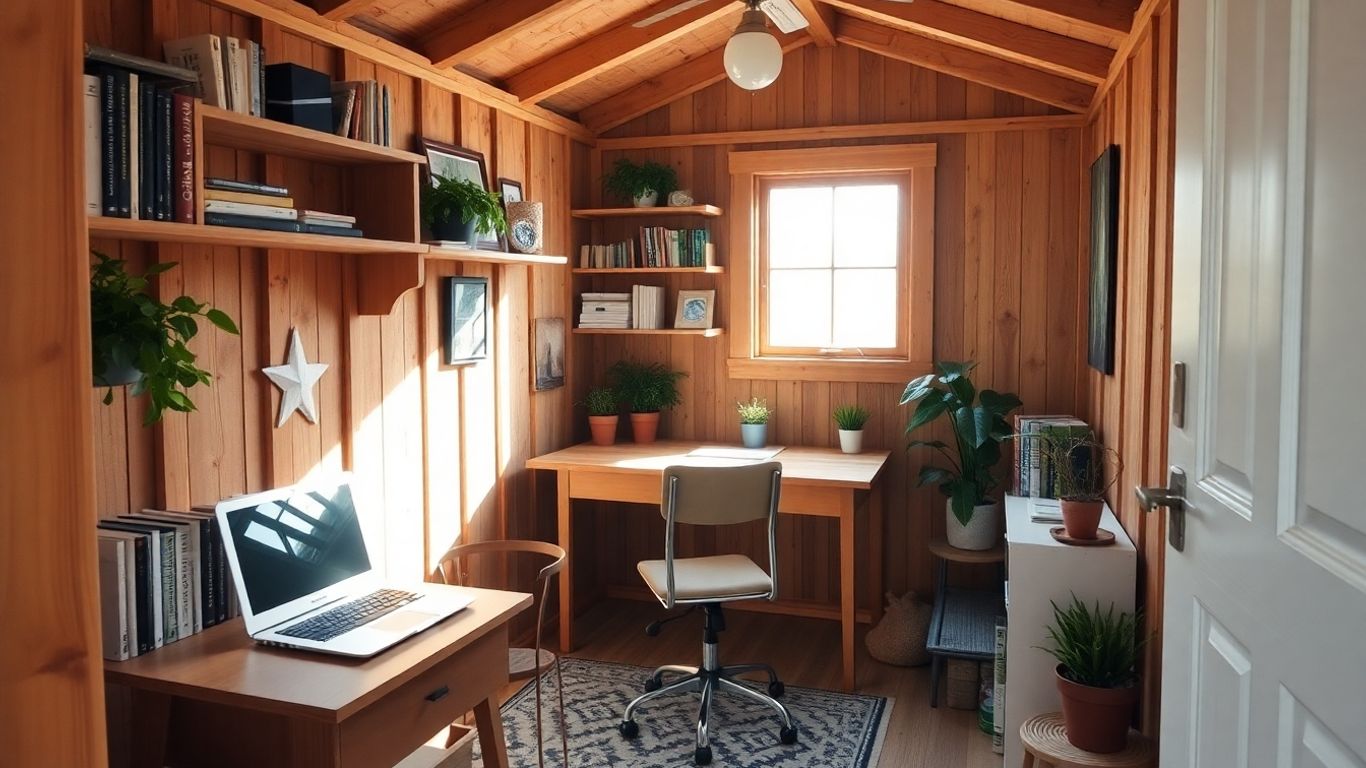
Now that we’ve got the structure and comfort sorted, it’s time to make this shed feel like a real workspace. This is where we turn a simple structure into a place where we can actually get things done. We want it to be functional, sure, but also a space we enjoy being in.
Selecting Ergonomic Furniture
Choosing the right furniture is more than just picking out a desk and chair. We need to think about how we’ll be spending hours in this space. Ergonomics are key to avoiding aches and pains later on. We don’t want to trade one discomfort for another, right?
Here are some things to consider when picking out furniture:
- Desk: Look for a desk that’s the right height. Your elbows should be at about a 90-degree angle when your hands are on the keyboard. A standing desk option could also be good for changing positions throughout the day.
- Chair: This is probably the most important piece. We need a chair with good lumbar support. Adjustable height, armrests, and tilt are also big pluses. Try to find one that supports your back properly.
- Storage: Clutter can really mess with our focus. Think about shelves, drawers, or filing cabinets that fit the space. Keeping things organized will make a big difference.
Personalizing Your Backyard Office Shed
Once the practical stuff is in place, we can start making it our own. This is where we add those personal touches that make the space feel inspiring and comfortable.
- Color Scheme: Pick colors that help you focus or relax, depending on your work style. Blues and greens are often calming, while yellows can be energizing.
- Decor: Add some plants to bring a bit of nature inside. Pictures or artwork that you like can make the space more pleasant. Even a nice rug can make the shed feel more like a room.
- Lighting: Beyond the main lights, consider a desk lamp for focused task lighting. A small lamp on a shelf can add a warm glow in the evenings.
Making the space feel like ours is just as important as making it functional. When we feel good in our workspace, we’re more likely to be productive and happy.
Think about what inspires you. Maybe it’s a vision board, a favorite quote, or just a clean, minimalist look. Whatever it is, incorporate it. This shed is our new office, and it should reflect our personality and work needs.
Wrapping It Up
So, we’ve walked through turning that old shed into a place where we can actually get work done. It might seem like a big project at first, but breaking it down makes it manageable. Think about it: a dedicated space, free from the usual household distractions, right in your own backyard. We hope this guide has given you the ideas and the push you need to start your own shed transformation. Go ahead, give it a try. You might be surprised at what you can create.
Frequently Asked Questions
What are the first steps we should take when planning to turn our shed into a workspace?
Before we start any building, we need to think carefully about how we’ll use the space. We should sketch out a plan for the inside, deciding where our desk, storage, and maybe even a comfy chair will go. Also, picking the best spot in our yard is key. We want a place that’s easy to get to but also offers some peace and quiet, away from the main house’s hustle and bustle. Considering things like sunlight and how it looks from our house will help us choose the perfect location.
What are the most important upgrades to make the shed comfortable for working year-round?
To make our shed a cozy place to work no matter the weather, we absolutely must think about temperature. Adding insulation to the walls and ceiling is a big help, keeping it warmer in winter and cooler in summer. Then, we’ll need a way to control the temperature, like a small heater or a fan. Good lighting is also super important so we don’t strain our eyes. We’ll need to figure out how to get electricity in there for lights, our computer, and other gadgets, making sure it’s all safe and up to code.
How can we make our new shed office feel like a real, inspiring workspace?
Once the basics are covered, we can focus on making it our own! Choosing a desk and chair that feel good to use for long periods is vital – we want something that supports our back and is the right height. After that, it’s all about the fun stuff. We can add plants, pictures, or anything that makes us feel happy and motivated. A little bit of decoration can turn a plain shed into a place we actually *want* to spend time in, making our work feel less like a chore and more enjoyable.
Tags: Affordable Sheds, Long Lasting Sheds, Residential Shed Builder